
BMW cooling systems operate under demanding conditions during Denver driving, especially with elevation changes, highway loads, and temperature swings. Aging water pumps, hoses, expansion tanks, and thermostats can develop leaks or failures over time. Preventative inspections and timely replacement of worn components can help BMW owners reduce the risk of overheating and expensive repairs.
The I-76 Heat Cycle vs The Mechanical Fault
If you commute from Reunion or Commerce City into Denver, your BMW experiences different demands from daily highway driving, elevation changes, and stop-and-go traffic. Over time, repeated heat cycles can place additional stress on cooling system components, especially aging plastic hoses, expansion tanks, and seals.
Denver’s elevation changes how vehicles manage heat because thinner air transfers heat differently. Combined with highway loads, climbing, and stop-and-go traffic, the cooling system may experience additional demand.
This means the electric water pump and cooling fan must maintain higher duty cycles to maintain proper operating temperatures. The mechanical fault isn’t a sudden “break”; it is the cumulative fatigue of plastic components like the expansion tank and Mickey Mouse flange that can no longer withstand the 1.5 to 2.0 bar of pressure required at 5,280 feet.
Forensic Breakdown of Material Fatigue at High Altitude
Cooling system components are relatively affordable compared with the potential cost of overheating-related repairs. Addressing warning signs such as coolant odors or visible residue early can help prevent more extensive engine damage.
BMW cooling systems combine aluminum engine components with plastic cooling connectors and housings. Because these materials expand and contract differently during temperature changes, repeated heat cycles can contribute to aging over time. During higher-load driving conditions, such as highway merging or extended climbs, an aging cooling component may be exposed to pressures and temperatures that reveal existing cracks or weaknesses.
Specialized Tools for Accurate BMW Cooling Diagnostics
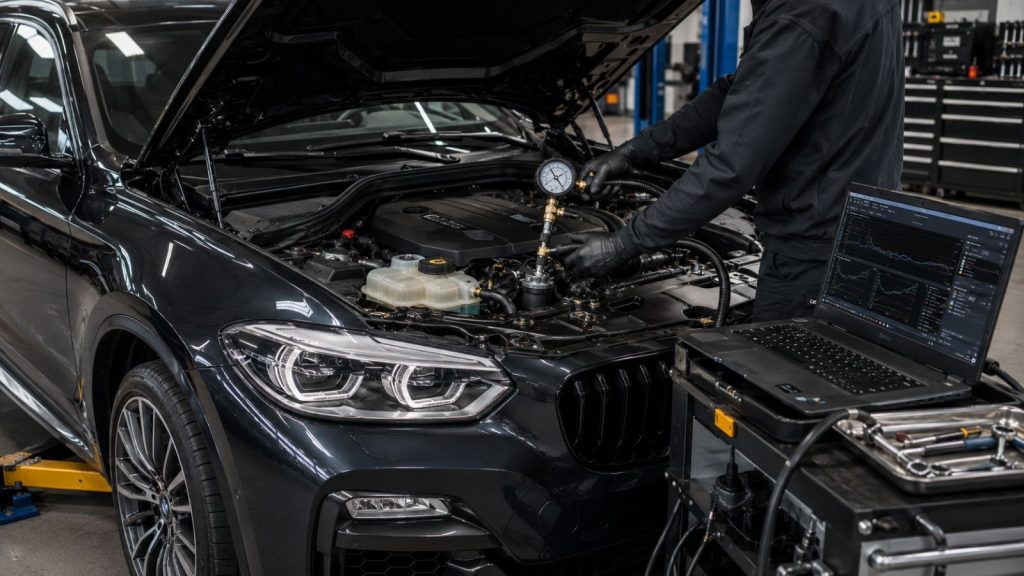
Proper cooling system diagnosis starts with identifying the actual source of the concern before replacing components. In the shop, factory-level BMW diagnostics and inspection methods help separate visible leaks from hidden cooling system issues.
- ISTA BMW diagnostics: Factory software is used to review electric water pump operation, system communication, and related performance data that may indicate developing concerns before an external leak appears.
- Cooling system pressure testing: The system is tested under controlled pressure to help locate slow leaks that may only appear when components are exposed to operating temperatures.
- UV dye inspection: UV-reactive coolant dye can help trace difficult-to-find seepage areas, including hidden leaks around hoses, connections, and cooling system components.
Combining diagnostic data with visual inspection provides a clearer understanding of the cooling system’s condition and helps determine the most appropriate repair approach.
Why BMW Cooling Repairs Should Address Aging Components
During BMW cooling system inspections, the focus is not only on the failed component but also on the surrounding parts that have experienced years of heat cycles and pressure changes. Replacing a leaking hose, flange, or seal may correct the immediate issue, but checking related components helps identify other areas that may be showing signs of wear.
In the shop, higher-mileage BMWs often reveal aging plastic cooling components such as expansion tanks, connectors, and hoses at different stages of deterioration. Repair recommendations are based on the vehicle’s condition, mileage, driving habits, and inspection findings rather than mileage alone. Using quality replacement components and proper sealing procedures helps maintain reliable cooling performance through Denver’s changing driving conditions.
Preventative Strategies for Denver Area Drivers
Regular cooling system maintenance can help reduce the risk of expensive overheating-related repairs, especially for BMWs driven in demanding conditions.
- Consider Regular Cooling System Inspections as Your BMW Ages : Inspection intervals depend on mileage, driving conditions, and vehicle history.
- The 3-Year Flush: Coolant service intervals depend on BMW model, coolant type, and maintenance history. Many owners choose periodic coolant replacement as part of preventative maintenance.
- Drive at Highway Speeds: Occasionally take your BMW out on E-470 at highway speeds for 20 minutes. This sustained heat helps prevent “yellow sludge” buildup in the oil system, which can restrict flow to the turbocharger cooling lines.
If you notice coolant leaks, unusual temperatures, or signs of aging cooling components, a professional inspection can help identify concerns before they become larger repairs. Salta Automotive, located at 1001 E 75th Ave UNIT A, Denver, CO 80229, provides BMW cooling system diagnostics and repair services for local drivers.
Frequently Asked Questions
Does an electric water pump always leak before it fails?
No. Most modern BMW electric water pumps fail electronically when the internal circuit board fries due to heat cycling, leaving the engine without circulation while the exterior stays dry.
Can I drive my BMW if the overheating light is yellow?
An overheating warning should always be taken seriously. Continuing to drive while temperatures are elevated can increase the risk of engine damage, especially during heavy loads or mountain driving.
Is an aluminum expansion tank better than the plastic one?
Yes. Aluminum tanks withstand the expansion and contraction of Denver’s climate significantly better than plastic, which is prone to cracking at the seams after 80,000 miles.
Will using tap water to top off my coolant cause damage?
Yes. Tap water contains minerals that create limescale, which acts as an insulator and further reduces your radiator’s ability to dissipate heat in the Mile High City.
What is the “domino effect” in BMW cooling repairs?
When one cooling component fails, it is worth inspecting related parts because other aging components may also be approaching the end of their service life.