
Standard mileage intervals do not reflect actual engine wear. Cold starts, short trips, stop-and-go traffic, and heavy loads accelerate oil breakdown through thermal stress, idling hours, and fuel dilution. Adhering to manufacturer-approved specifications and evaluating real-world driving conditions ensures optimal protection for European engines.
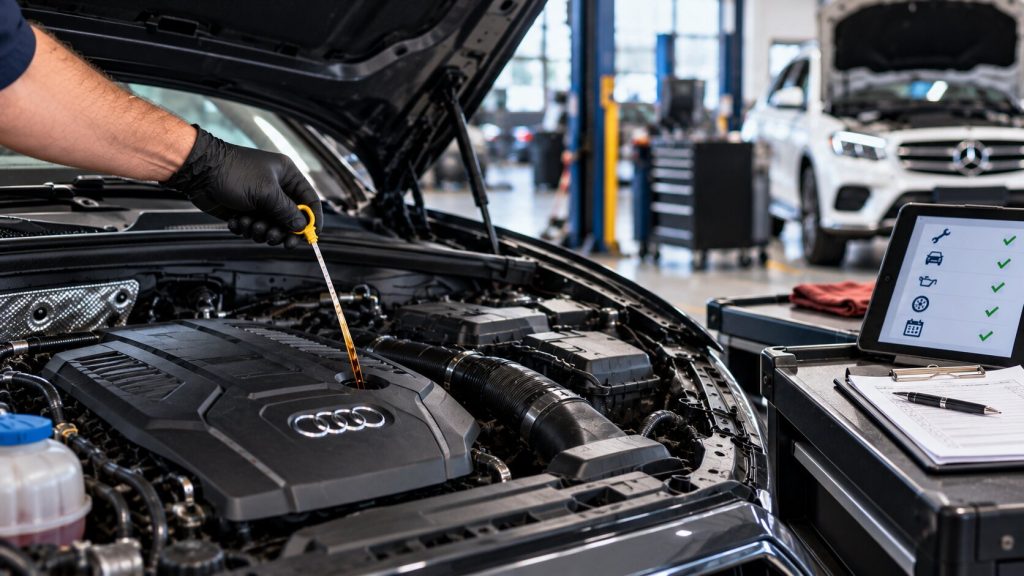
Modern European engines are precision-engineered machines, built with strict tolerances and specific fluid demands. While standard maintenance schedules often emphasize fixed mileage targets, mileage is only part of the equation. Operating conditions, driving style, ambient temperatures, and trip lengths significantly affect how engine oil performs and degrades over time. Understanding how these factors influence oil life helps keep your Audi, BMW, Mercedes-Benz, Porsche, Volkswagen, Volvo, or MINI running smoothly.
Identifying Engine Stress Factors Beyond Mileage
Engine oil performs several essential duties: it lubricates moving parts, reduces friction, cools internal components, suspends contaminants, and protects against corrosion. Heat, shear forces, and combustion byproducts gradually break down the additive package and change the oil’s effective viscosity. While odometers track distance traveled, they do not measure engine hours, cold starts, or thermal stress. Ten thousand miles accumulated primarily on open highways under steady thermal conditions places a vastly different demand on engine oil than ten thousand miles logged in short, stop-and-go trips during an icy winter.
Depending on the model, engine, operating conditions, and maintenance history, recommended service timing can vary. For many European vehicles driven in everyday conditions, a 5,000-mile oil change interval serves as a reliable baseline to help protect internal engine components against gradual wear.
Evaluating Everyday Operating Conditions That Degrade Engine Oil
Determining an appropriate European vehicle oil service requires evaluating how and where the vehicle is driven. Several everyday operating scenarios influence oil breakdown beyond standard distance metrics:
- Short Trips and Frequent Cold Starts: When an engine does not reach full operating temperature, moisture from condensation and unburnt fuel from the cold-enrichment cycle collect in the crankcase. Longer drives allow these contaminants to burn off naturally through crankcase ventilation; frequent short trips cause them to accumulate, accelerating oil degradation over time.
- Stop-and-Go Traffic and Extended Idling: Heavy traffic and prolonged idling add engine operating hours without adding much mileage. Frequent acceleration and deceleration also create varying engine loads compared to steady highway driving. Together, these conditions place additional demands on the engine and its oil, making regular oil changes especially important.
- Mountain Drives and Heavy Load: Climbing steep mountain grades, towing, or carrying heavy loads increases engine workload and can raise oil temperatures. Sustained high temperatures can accelerate oil degradation and contribute to deposit formation over time, making regular oil changes especially important.
- Seasonal Temperature Variations: Cold winter starts increase mechanical resistance and the potential for fuel dilution, while hot summer conditions can increase oil temperatures and accelerate degradation, particularly during demanding driving.
Prioritizing Manufacturer-Approved Oil Formulations
Regardless of driving conditions or environment, the foundational requirement for any European engine is using the correct, manufacturer-approved oil specification.
- Approved Formulations Matter: European vehicle manufacturers (such as BMW Longlife, VW 504.00/507.00, Porsche A40/C30, or Mercedes-Benz MB 229.5) establish specific standards for film strength, shear stability, and detergent packages.
- Viscosity vs. Approval: Selecting the correct viscosity (such as 0W-30 or 5W-40) is important, but formal manufacturer approval ensures the oil formula meets the exact chemical and protection requirements of your engine.
- Location and Climate: Operating conditions may suggest adjusting service timing, but the required oil specification remains dictated by the manufacturer, regardless of where the vehicle is driven.
Enhancing Oil Service with Digital Inspections
Because operating conditions vary between drivers, physical and visual evaluations provide vital insight into overall engine health. All oil changes are accompanied by a Digital Vehicle Inspection (DVI) from us, giving you complete visibility into your vehicle’s condition.
Our standard maintenance evaluation includes:
- Digital Vehicle Inspection (DVI): Complete with clear photographs and technician notes, allowing you to visually review fluid conditions and accessible engine areas with clarity.
- Vehicle-Specific Selection: Matching exact manufacturer-approved synthetic oil and OEM-quality filters to your vehicle’s specifications.
- Visual Leak and Component Checks: Inspecting accessible engine bays, seals, and undersides for signs of seepage or wear.
- Clear Findings: Communicating inspection results directly so you can make confident decisions about your vehicle’s maintenance plan.
Evaluation begins with observed symptoms and fluid conditions. Depending on the vehicle and driving history, we may recommend additional inspection or testing to ensure every system remains in proper working order.
Planning Tailored Maintenance for European Engines
Establishing a proactive maintenance routine and adapting timing based on real-world driving conditions is one of the most effective ways we preserve engine reliability and performance. Whether managing daily city commutes, mountain trips, or variable seasonal conditions, we are here to help with our tailored service plan to keep your European vehicle operating smoothly and dependably.
Ready to work with us on the maintenance plan for your Audi, BMW, Mercedes-Benz, Porsche, or Volkswagen? Schedule an appointment with us at Salta Automotive, located at 1001 E 75th Ave UNIT A, Denver, CO 80229.
Frequently Asked Questions
Does driving in cold weather affect how often I need an oil change?
Cold temperatures mean the engine takes longer to reach optimal operating temperature. During cold starts, extra fuel is injected into the combustion chamber, which can lead to fuel dilution in the crankcase if drives are short. If your winter driving consists mostly of short trips, sticking to a consistent 5,000-mile oil service interval helps protect your engine components.
Why doesn’t mileage alone tell me when my oil needs to be changed?
Mileage only tracks distance, not engine operating hours, thermal load, or driving severity. An engine idling in heavy traffic or completing frequent short, cold trips experiences more thermal cycles and fuel exposure per mile than an engine driven at consistent highway speeds.
Does mountain driving require a special type of engine oil?
No. European vehicles require the applicable manufacturer-approved oil specification regardless of terrain or altitude. However, the increased engine load and elevated temperatures associated with steep climbs mean the oil breaks down faster, making timely service intervals particularly helpful.
How do I know which oil specification my European car requires?
Your vehicle’s owner’s manual outlines the exact manufacturer approval code required for your engine (e.g., VW 502.00, BMW Longlife-01). You can always ask us as well, we are happy to help!