
Short trips, school drop-offs, and stop-and-go driving increase engine wear and moisture accumulation in family vehicles. For European makes like Audi, BMW, and Mercedes-Benz, these patterns influence oil degradation. While operating conditions vary, proper maintenance schedules and manufacturer-approved oil specifications ensure reliable performance.
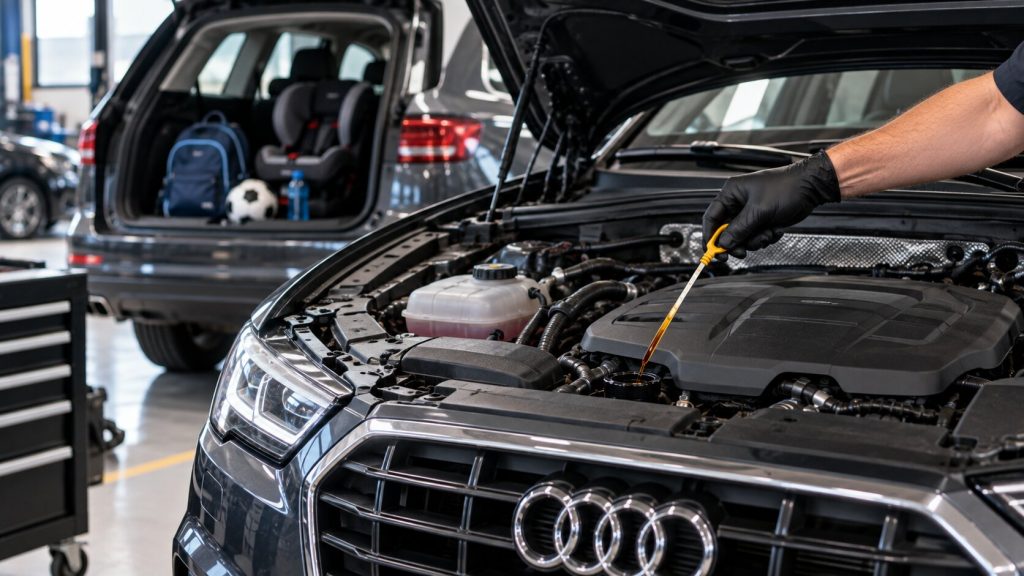
Managing family schedules around school drop-offs, sports practices, and local errands means your vehicle spends a lot of time navigating stop-and-go traffic. For owners of European vehicles like Audi, BMW, Mercedes-Benz, Volvo, or Volkswagen, these everyday driving patterns introduce specific operational considerations. Understanding how routine local driving affects your engine can help you maintain your vehicle properly.
How Short Trips and Idling Affect Your Engine Oil
When you take short trips, such as driving a few blocks to school or running quick neighborhood errands, your engine may not reach its optimal operating temperature.
- Moisture Accumulation: During a cold start, natural condensation forms inside the engine. On longer drives, the engine heats up sufficiently to evaporate this moisture. Short trips often cut journeys short before the oil reaches full operating temperature, allowing moisture and unburned fuel traces to remain in the crankcase.
- Idling and Stop-and-Go Traffic: Waiting in school pickup lines or idling in heavy local traffic increases engine operating hours relative to the actual miles driven. While the odometer might show a low mileage accumulation, the engine has still worked through hours of combustion cycles.
- Oil Viscosity and Protection: Modern European engines rely on precise, manufacturer-approved oil formulations to maintain protection across tight mechanical tolerances. Consistent short-trip driving can influence how oil degrades over time, making regular evaluation essential.
Evaluating Your Maintenance Interval
A common misconception I hear is that every vehicle requires an oil change at a fixed interval, such as every 5,000 miles. In reality, the appropriate schedule depends on several factors:
- The specific model, engine, and model year of your vehicle.
- The manufacturer’s required oil specifications and service schedules.
- The balance of short trips versus sustained highway driving.
- Operating time, mileage, and overall maintenance history.
Driving patterns like frequent short trips and heavy local commuting can influence when maintenance is needed, but the required oil specification always comes from the manufacturer regardless of where you drive in Denver. I may recommend testing or a professional inspection to assess the current condition of your vehicle’s fluids.
Practical Maintenance Strategies for Busy Families
To keep your family vehicle running reliably throughout the school year, I suggest these practical steps:
- Monitor Operating Conditions: Take note of your typical weekly driving habits. If your vehicle primarily sees short neighborhood trips, keep a closer eye on your service schedule milestones (both time and mileage).
- Prioritize Manufacturer-Approved Fluids: Ensure that any oil service uses fluids that strictly match your manufacturer’s approvals. European engines require specific formulations to protect internal components effectively.
- Utilize Professional Inspections: Routine physical or visual inspections, alongside a Digital Vehicle Inspection with photos and technician notes, can help catch minor concerns before they grow. Evaluation begins with your vehicle’s symptoms and available evidence, and additional inspection or testing may be recommended depending on what is found.
Protect Your Engine From Short-Trip Wear
If your routine consists of quick school drop-offs and stop-and-go errands around Denver, don’t let short trips quietly accelerate engine wear on your European vehicle. I am here to evaluate your car’s specific oil condition and keep your maintenance schedule on track using manufacturer-approved fluids and thorough Digital Vehicle Inspections. Schedule your next service appointment with me today at Salta Automotive, located at 1001 E 75th Ave UNIT A, Denver, CO 80229.
Frequently Asked Questions
Do short trips mean I need to change my European car’s oil more often?
Frequent short trips and extensive idling increase engine wear and moisture accumulation relative to mileage. While the appropriate interval depends on your specific vehicle, engine, and manufacturer schedule, severe operating conditions may mean your vehicle reaches its service threshold by time or operating hours before standard mileage markers.
Does Denver’s climate or altitude require special oil specifications?
No. While Denver’s seasonal temperature changes and local driving conditions are important operating considerations, European engines require the applicable manufacturer-approved oil specification regardless of where they are driven.
What is included in a standard oil service at Salta Automotive?
A standard service involves vehicle-specific oil and filter selection following manufacturer requirements, paired with Digital Video Inspection to assess the safety and reliability of your vehicle. Depending on the vehicle and symptoms observed further testing may be recommended.
Can a check engine light indicate an oil-related issue?
Yes, however a check engine light can be triggered by a wide range of conditions, from minor sensor faults to mechanical concerns. Testing is always needed before an accurate cause and repair can be determined.