
A low oil pressure warning signals a critical lubrication issue requiring you to safely shut off the engine immediately. Because level and pressure differ, a full engine can still lack pressure. Avoid guesswork and rely on proper diagnostic testing to identify the root cause before driving again.
If your vehicle displays a low oil pressure warning, shut the engine off as soon as it is safe to do so and do not continue driving until the cause has been evaluated. Engine components depend on a continuous supply of pressurized oil for lubrication. If that supply is interrupted, continuing to operate the engine can cause severe mechanical damage very quickly.
An oil pressure warning does not necessarily mean the oil pump has failed or that the engine is already damaged. It means the vehicle has detected a condition serious enough to require immediate attention. The next step is determining whether the engine actually has inadequate oil pressure and, if so, why.
Oil Pressure and Oil Level Are Not the Same Thing
Oil level and oil pressure describe two different conditions.
- Oil level: refers to the quantity of oil in the engine. Depending on the vehicle, this may be checked with a traditional dipstick or an electronic oil level measurement system.
- Oil pressure: refers to the pressurized supply of oil moving through the engine’s lubrication system.
An engine can have the correct amount of oil in the sump and still have an oil pressure problem. A full oil level does not prove that the engine has adequate oil pressure.
This distinction is particularly important because modern vehicles may display several different oil-related messages. An oil service reminder indicates that scheduled maintenance is due. A low oil level warning indicates that the engine may need oil added and the reason for the low level should be considered. A low oil pressure warning indicates a potentially serious lubrication-system problem and should be treated as urgent.
Why Your Engine Needs Oil Pressure
The oil pump draws engine oil from the sump and supplies it throughout the lubrication system. Pressurized oil reaches critical moving components where it helps maintain a protective lubricating film between surfaces.
Engine bearings, camshafts, turbochargers, and other moving components depend on an adequate oil supply. Many modern engines also use engine oil hydraulically to operate systems such as variable valve timing, timing chain tensioners, and electronically controlled valve systems.
Proper lubrication therefore depends on more than simply having oil in the engine. The oil must be the correct specification and viscosity, and the lubrication system must be capable of supplying it where it is needed at the appropriate pressure.
What Can Cause a Low Oil Pressure Warning
An oil pressure warning identifies a condition, not the failed component. There are several possible causes, and the appropriate diagnostic path depends on the vehicle and the symptoms.
Potential causes can include:
- Low engine oil level
- Incorrect engine oil or viscosity
- An incorrect or restricted oil filter
- A faulty oil pressure sensor, switch, wiring, or electrical circuit
- An oil pressure control or regulation problem
- A restricted oil pickup or lubrication passage
- An oil pump problem
- Excessive internal engine clearances or wear
- Other vehicle-specific lubrication system faults
Modern European engines can use sophisticated lubrication systems, including variable-displacement oil pumps and electronically controlled pressure regulation. Understanding how the particular system is designed to operate is an important part of diagnosing a warning correctly.
This is why replacing an oil pressure sensor or oil pump based on the warning alone is not a reliable diagnostic approach.
How We Diagnose an Oil Pressure Warning
Diagnosis starts by understanding the warning, the conditions under which it occurred, and the design of the vehicle’s lubrication system. Initial evaluation may include checking the oil level and condition, verifying the correct oil and filter, reviewing stored faults, and examining relevant operating data using manufacturer-level diagnostic equipment.
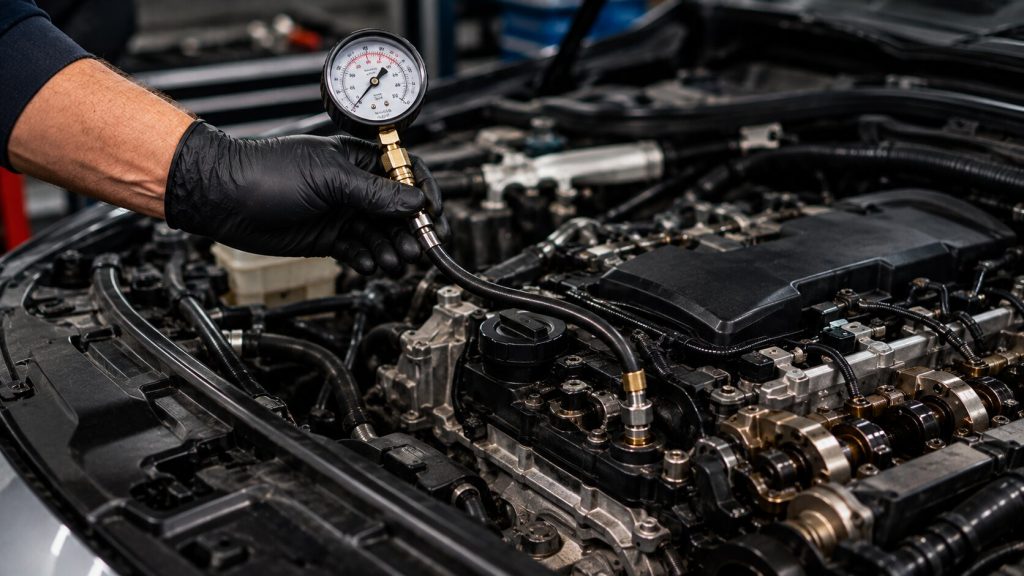
From there, testing depends on what the evidence indicates. When actual oil pressure needs to be verified, a mechanical pressure gauge can provide a direct measurement independent of the vehicle’s electronic pressure monitoring. That measurement can be compared with manufacturer specifications at the appropriate engine speed and operating temperature.
Depending on the vehicle, the engine may use a simple oil pressure switch, an electronic pressure sensor, a controlled oil pump, or a combination of monitoring and control strategies. Comparing actual pressure with the information reported by the vehicle can help determine whether the problem is hydraulic, mechanical, electrical, or related to the monitoring system itself. Additional testing can then follow the evidence rather than relying on assumptions.
Why We Don’t Assume the Oil Pump Has Failed
The oil pump is an important part of the lubrication system, but a low oil pressure warning does not automatically condemn it. For example, an engine could have adequate mechanical oil pressure while a faulty sensor or electrical circuit reports otherwise. Another engine could genuinely have inadequate pressure because of a regulation problem, restricted oil supply, internal wear, or another mechanical condition.
The symptoms presented to the driver may be similar even though the repairs are completely different. The goal of diagnosis is therefore not simply to make the warning disappear. It is to determine whether the engine actually has an oil pressure problem and identify the underlying cause.
Can Engine Oil Cause an Oil Pressure Problem
Engine oil viscosity changes with temperature by design, and the manufacturer specifies an appropriate oil viscosity and performance standard based on the requirements of the engine. Using an incorrect oil can affect lubrication-system performance in some applications. Low oil level, an incorrect filter, excessive oil contamination, or other service-related conditions can also contribute to oil pressure concerns.
However, an active oil pressure warning should not automatically be blamed on old oil or treated with an oil change alone. If the vehicle is reporting an oil pressure problem, the cause should be evaluated before continuing to operate the engine. Proper maintenance helps prevent lubrication problems, but maintenance and diagnosis serve different purposes.
Accurate Diagnosis Protects Your Engine
An oil pressure warning deserves immediate attention, but it does not tell me which part needs to be replaced. I combine manufacturer-level vehicle information, scan data, mechanical testing when appropriate, and years of technician experience to understand why the warning occurred before recommending a repair. Technology provides information, but skilled technicians provide understanding.
If your BMW, Audi, Volkswagen, Mercedes-Benz, Porsche, or other vehicle displays an oil pressure warning, shut the engine off as soon as it is safe to do so. Once the vehicle is safely stopped, arrange to have the cause evaluated rather than continuing to drive.
If you need help diagnosing an oil pressure warning, schedule an appointment with me at Salta Automotive, located at 1001 E 75th Ave UNIT A, Denver, CO 80229, United States.
Frequently Asked Questions
Does a low oil pressure warning always mean my oil pump is broken?
No. An oil pressure warning indicates that the vehicle has detected a problem with the lubrication system, but it does not identify the cause. Low oil level, a sensor or electrical fault, an oil pressure control problem, an oil pump problem, internal engine wear, or other lubrication-system faults can all be possibilities depending on the vehicle. Proper testing is needed to determine whether oil pressure is actually low and why.
Can my oil level be full and still have low oil pressure?
Yes. Oil level measures how much oil is in the engine, while oil pressure describes how that oil is being supplied through the lubrication system. An engine can contain the correct amount of oil and still have inadequate oil pressure because of a mechanical, hydraulic, or control-system problem.
Will changing my oil fix an intermittent low oil pressure warning?
Not necessarily. Incorrect oil viscosity, an incorrect filter, low oil level, or another service-related issue can contribute to an oil pressure problem in some cases. However, an oil change should not be assumed to correct an active oil pressure warning. The cause should be evaluated before the vehicle is driven further.
Should I continue driving if my oil pressure warning comes on?
No. If your vehicle displays a low oil pressure warning, shut the engine off as soon as it is safe to do so and do not continue driving until the cause has been evaluated. Engine components depend on an adequate supply of pressurized oil, and operating an engine without sufficient oil pressure can cause severe mechanical damage very quickly.