
Is your car pulling to one side or vibrating? These are signs of a wheel alignment issue. Wheel alignment is critical for your car’s:
- Handling and Performance: Ensures a straight drive and crisp steering.
- Tire Life: Prevents expensive, premature tire wear.
- Safety: Makes your vehicle predictable and easier to control.
To keep your car driving smoothly and safely, you need to understand the core alignment angles. We’ll demystify these key terms and explain their importance for a perfect ride.
What is Wheel Alignment?
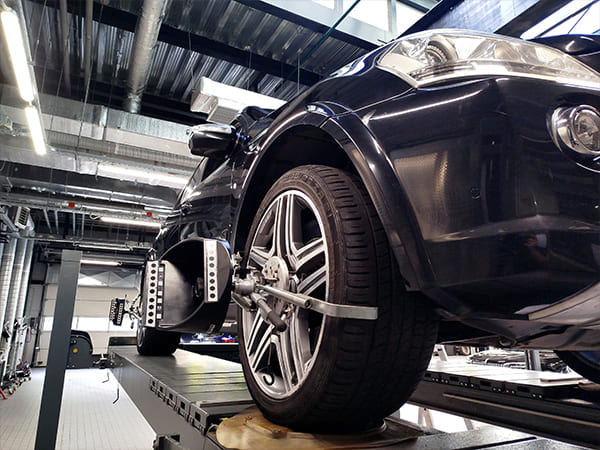
Before we get into the specifics of alignment angles, let’s first define what wheel alignment is. Wheel alignment is the process of adjusting the components of your vehicle’s suspension that link the wheels to the car. Alignment makes sure your wheels are sitting at the right angles to each other and to the road. When it’s right, your car drives straight, handles well, and your tires make proper contact with the road.
While alignment is often confused with balancing, they are two different things. Balancing deals with the distribution of weight across the wheel and tire, while alignment focuses on the angles at which the tires meet the road.
The Three Key Wheel Alignment Angles
There are three main alignment angles that impact how your vehicle drives: camber, caster, and toe. Each of these angles plays a crucial role in your car’s handling, tire wear, and overall driving experience.
1. Camber
Definition: Camber is the angle of the wheels relative to the road when viewed from the front of the vehicle.Camber refers to the inward or outward tilt of the tire’s top.
- Positive Camber: The top of the tire tilts outward from the vehicle. This is typically used in racing vehicles to improve cornering performance.
- Negative Camber: The inward tilt of the tire’s top is toward the vehicle. This is commonly seen in regular passenger vehicles and improves tire grip and stability when turning.
Impact:
- Excessive positive or negative camber means your tires are tilted in or out too much, causing uneven and premature tire wear on the inner or outer edge.
- Incorrect camber affects handling, especially when cornering or during straight-line driving.
2. Caster
Definition: Caster refers to the angle of the steering axis when viewed from the side of the vehicle. This angle affects the stability and steering effort of your vehicle.
- Positive Caster: The steering axis tilts backward (toward the driver). This provides better straight-line stability and is commonly found in most modern vehicles.
- Negative Caster: The steering axis tilts forward, which can make steering feel light and less stable. It’s less common but can be used in certain vehicle designs.
Impact:
- Proper caster alignment improves high-speed control, eliminates steering wheel shake, and prevents unwanted drifting.
- Incorrect caster angles can lead to poor handling and steering instability.
3. Toe
Definition: Toe refers to the angle at which the tires point relative to the centerline of the vehicle when viewed from above.
- Toe-In: The front of the tires is closer together than the rear, resembling a pigeon-toed stance.
- Toe-Out: The front of the tires is further apart than the rear, resembling an outward stance.
Impact:
- Toe misalignment can cause uneven tire wear, typically along the edges of the tire.
- Toe-in can improve straight-line stability but may lead to higher tire wear, while toe-out may improve cornering at the expense of straight-line performance.
Why is Proper Wheel Alignment Important?
Having your wheels aligned correctly is essential for several reasons:
1. Better Handling and Control
If your wheels aren’t lined up right, your car won’t drive straight, and you might lose control. Bad alignment can make your car drift to one side or cause the steering wheel to shake—that’s a big risk, especially when you’re driving fast.
2. Improved Tire Life
Incorrect wheel alignment causes tires to wear unevenly and prematurely. When tires are misaligned, one side often wears out much faster, necessitating earlier replacement than anticipated.
3. Enhanced Fuel Efficiency
Misaligned wheels can increase rolling resistance, causing your engine to work harder to move the car. This results in reduced fuel efficiency. Keeping your wheels aligned helps to improve gas mileage and save you money at the pump.
4. Smoother Ride
Proper wheel alignment is key to a smoother, more comfortable driving experience. Without it, your car can feel unstable, even at slower speeds, causing discomfort for both those driving and riding as passengers.
Supporting Data: Why Alignment Matters in Denver, CO
Look, when you’re driving around Denver, navigating everything from the smooth stretches of I-25 to those surprisingly rough back roads leading up to the mountains, your wheels are taking a beating. Honestly, it’s pretty wild—a study back in 2021 suggested that half the cars we see out here are probably a little wonky, alignment-wise. Think about it: our weather is all over the place, the roads get worn down fast, and it only takes one pothole to throw things off. Ignoring an alignment issue is basically setting yourself up for a seriously expensive repair down the road, and nobody wants that. It’s just smart car ownership to get those wheels checked regularly; it’s the best defense for your tires and that complex suspension system.
Plus, a 2020 AAA study points out that poor alignment can chew up your tires 30% faster, leading to replacement costs you’d rather avoid. Given Denver’s extreme temperature shifts, keeping your car properly aligned is even more vital for preventing that extra, unnecessary wear and tear.
Keep Your Vehicle in Peak Condition with Proper Alignment
Wheel alignment revolves around three key angles: camber, caster, and toe.Wheel alignment is crucial for safety and saving money, especially in Denver. Bad alignment causes a shaking steering wheel, poor handling, and fast tire wear. Getting a proper alignment is the best way to make your tires last, improve your car’s feel, and even save a little on gas.
If you’re noticing those tell-tale signs like uneven tire wear or your car pulling to one side in Denver, CO, don’t put it off! We’re here to help. Salta Automotive’s expert technicians will get your alignment spot-on, ensuring your car is running its absolute best. Give us a call today to schedule your alignment check and keep your ride safe and smooth!
FAQs
How often should I get my wheel alignment checked?
Aim for a wheel alignment check annually, or roughly every 12,000 miles. However, don’t hesitate to bring your vehicle in sooner if you notice any changes in how your car is handling!
Can I drive my car if the alignment is off?
While it’s possible, it’s not advisable. Driving with misaligned wheels can lead to further tire damage and poor vehicle handling, making it unsafe.
How do I know if my car needs an alignment?
Signs include uneven tire wear, the car pulling to one side, or a crooked steering wheel when driving straight.
Will getting my wheels aligned improve my fuel efficiency?
Yes, properly aligned wheels reduce rolling resistance, which can improve fuel efficiency by reducing the strain on your engine.
How much does a wheel alignment cost in Denver?
- Cost Estimate: A standard wheel alignment generally ranges from $75 to $100.
- Variability: The exact price depends on your vehicle’s make, model, and specific alignment requirements.
- Recommendation: For the most precise quote, contact a local service center.
This is an estimate; the actual price varies based on your vehicle and its specific needs. For the most accurate quote, contact a local service center.