European SUVs often combine higher vehicle weight with powerful engines, which can place additional load on the engine under certain driving conditions. Towing, mountain driving, short trips, and temperature extremes can further influence engine and oil operating conditions. Using oil that meets the manufacturer’s specifications and following an appropriate maintenance interval helps protect the engine over the long term.
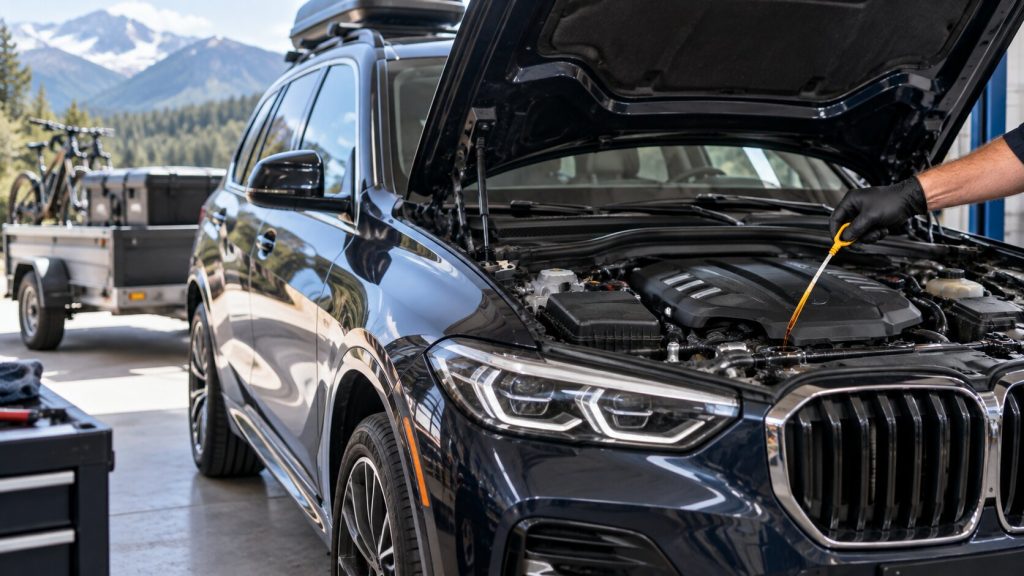
Heavier vehicles, towing demands, and increased engine loads can place additional thermal and mechanical stress on engine components. For most modern vehicles, we recommend a 5,000-mile oil change interval as a practical baseline, while also considering the specific vehicle, operating conditions, and manufacturer requirements when there is a reason to adjust that recommendation.
Understanding SUVs Engine Demands
Luxury SUVs,particularly European models like the BMW X series, Audi Q line, Mercedes-Benz GLE or GLS, and Land Rover platforms, often feature high-output turbocharged or supercharged engines. These powerplants generate substantial internal heat and torque.
When you add the weight of a larger vehicle, stop-and-go driving, heavy cargo, towing, or steep mountain grades, the engine may have to work harder. These conditions can increase engine load and oil temperatures, making regular oil changes especially important. Regardless of how the vehicle is used, the oil should always meet the manufacturer’s required specifications.
Key Factors That Influence SUV Oil Service Planning
For most modern SUVs, we recommend a 5,000-mile oil change interval as a practical baseline for everyday driving. How the vehicle is used still matters, and certain operating conditions can place additional demands on the engine and oil:
- Operating Environment: Frequent cold starts, seasonal temperature swings, and short trips where the engine rarely reaches optimal operating temperature can accelerate oil contamination.
- Load and Towing: Hauling heavy payloads or towing trailers increases sustained engine load and oil temperatures, which can shorten the effective lifespan of engine oil.
- Manufacturer Specifications: Regardless of driving conditions, the oil used should meet the viscosity and manufacturer specifications required for the engine.
Vehicles exposed to particularly demanding operating conditions may benefit from additional maintenance considerations, but for most modern vehicles and typical driving habits, a 5,000-mile oil change interval remains our general recommendation.
Differentiating Oil Viscosity, Approval, and Performance
Selecting the right oil for a European SUV requires attention to technical detail rather than marketing claims:
- Viscosity and Formulation: Viscosity dictates how oil flows across varying temperatures. Using an incorrect weight can affect component protection during different operating phases.
- Manufacturer Approvals: Terms like “meets or exceeds” do not automatically equal formal manufacturer certification. European engines require specific approvals (such as BMW Longlife, VW/Audi standards, or Mercedes-Benz MB specifications) to ensure proper lubrication, emission control compatibility, and long-term engine wear protection.
Professional Maintenance for European SUVs
If your European SUV is approaching its next scheduled maintenance interval, my professional care ensures your engine receives the exact fluid formulation it requires. Schedule a Digital Vehicle Inspection or professional oil service with my team at Salta Automotive, located at 1001 E 75th Ave UNIT A, Denver, CO 80229.
Frequently Asked Questions
Do heavier SUVs need oil changes more often than smaller cars?
Not necessarily. A heavier vehicle can place more load on the engine, particularly when towing, carrying heavy loads, or driving in demanding conditions, but vehicle weight alone does not determine the oil change interval. We recommend a 5,000-mile oil change interval for most modern vehicles, with shorter intervals when specific operating conditions or vehicle requirements justify them.
Does driving in Denver’s climate mean I need a different oil specification?
No. European engines require the applicable manufacturer-approved oil specification regardless of local altitude, weather, or where the vehicle is driven.
What is the difference between oil viscosity and manufacturer approval?
Viscosity describes an oil’s resistance to flow at different temperatures, while manufacturer specifications define additional performance requirements the oil must meet, such as wear protection, deposit control, oxidation resistance, and compatibility with the engine and its emissions systems.
Can towing a trailer void my vehicle warranty if I use the wrong oil?
Towing within the vehicle manufacturer’s limits should not by itself affect warranty coverage. However, using oil that does not meet the required specification could affect coverage for related engine damage, depending on the circumstances of the failure. If you regularly tow, it is also important to follow any additional maintenance requirements specified for that type of use.
What is included in a standard European oil service at Salta Automotive?
A standard service involves vehicle-specific oil and filter selection, draining spent fluid according to manufacturer guidelines, and visual inspection of accessible areas for visible concerns documented through a Digital Vehicle Inspection.