
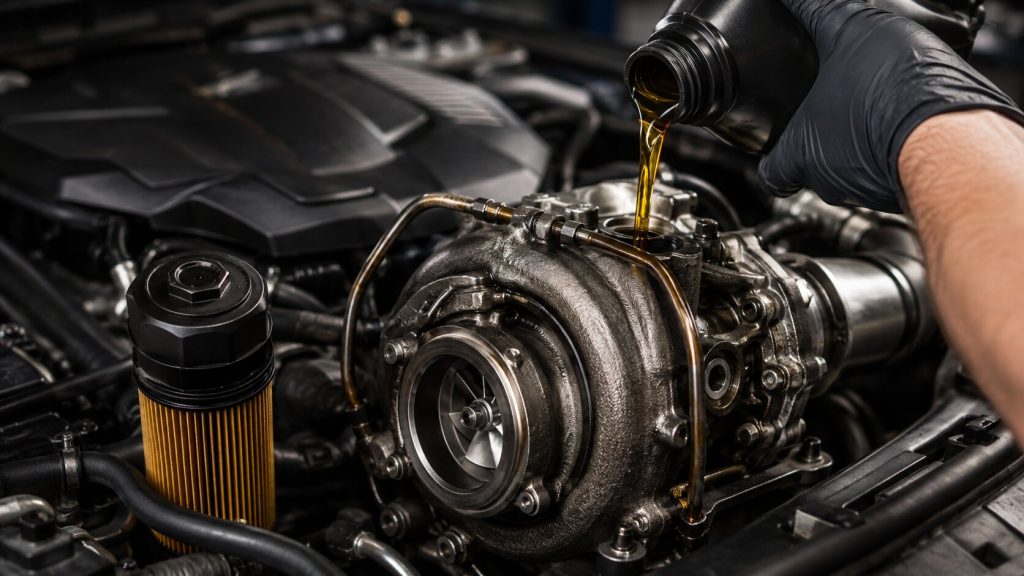
Denver’s high altitude and heavy commuting place extreme thermal stress on BMW turbochargers. To prevent premature bearing wear and oil coking, experts recommend moving away from extended factory intervals and switching to a 5,000-mile schedule using BMW-approved synthetic oil to protect long-term engine health.
Why Commuter Traffic and Altitude Stress Turbochargers
Stop-and-go commuting creates repeated heat cycles and extended engine operating time that mileage alone doesn’t always capture. Turbochargers operate in an extremely hot environment, making clean, high-quality engine oil particularly important for lubrication and heat management. In the shop, I frequently see premature turbocharger wear and other oil-related engine problems in vehicles maintained on extended 10,000-mile oil change intervals.
Based on what I see servicing European vehicles in Denver, I do not recommend those extended intervals for long-term engine health and instead recommend oil changes every 5,000 miles.
How Turbochargers Use Oil for Thermal Protection
Oil does a lot more than keep moving parts from scraping together. In a turbocharged engine, it performs two critical jobs: lubricating the turbocharger’s high-speed bearing system and carrying heat away from the center housing. Because turbochargers operate under extreme temperatures and shaft speeds, maintaining clean, high-quality oil is essential to protecting the bearing system and limiting heat-related deposits and wear.
The Impact of Oil Quality on Component Longevity
High-quality synthetic engine oils use carefully formulated additive packages to control deposits, keep contaminants suspended, and resist oxidation under high temperatures. This is particularly important in turbocharged engines, where the oil is exposed to demanding operating conditions. As oil degrades, its viscosity and additive performance can change while varnish, sludge, and other deposits may develop. Using the correct manufacturer-approved synthetic oil and changing it at appropriate intervals helps maintain lubrication and protect the turbocharger’s bearing system over time.
Why Viscosity Stability Is Important for High-RPM Support
Turbocharger shafts can spin beyond 150,000 RPM, requiring a consistent supply of oil with the proper viscosity to maintain an effective lubricating film between moving components. Extreme temperatures and oil degradation can compromise lubrication performance, increasing the potential for bearing wear and damage. Oil formulated to maintain appropriate viscosity across a wide range of operating temperatures provides critical protection during everything from cold starts to sustained mountain climbs.
Optimizing Lubrication Flow to Prevent Bearing Starvation
Turbocharger oil feed passages are narrow to maintain rapid, high-pressure supply. When varnish or coked oil restricts these channels, lubrication volume drops, which can cause overheating. Clean flow cools the center housing and flushes heat away, maintaining the condition of the internal seals.
The Reality of Oil Coking in Forced-Induction Engines
Oil coking is one of several conditions that can contribute to turbocharger wear and failure. After a turbocharged engine has been operated under sustained load, such as during a mountain climb, significant heat can remain in the turbocharger after the engine is shut off. With oil circulation stopped, this residual heat can accelerate oil degradation and contribute to hard carbon deposits in and around the turbocharger’s oil passages.
Over time, excessive deposits can restrict oil flow or drainage and interfere with proper lubrication of the turbocharger’s bearing system. Depending on the type and severity of the failure, symptoms may include abnormal whining or whistling noises, increased oil consumption, or blue exhaust smoke.
Why Denver’s Climate Supports Shorter Service Intervals
At 5,280 feet, Denver’s lower air density can require a turbocharger to work harder to achieve the engine’s requested boost under load. Combined with sustained mountain driving, repeated heat cycles, short trips, and stop-and-go commuting, these conditions can place significant demands on both a turbocharged engine and its oil. Engine oil provides critical lubrication while also carrying heat away from turbocharger components, and its protective properties gradually degrade with mileage, heat, and contamination.
These operating conditions are part of why I recommend 5,000-mile oil changes rather than relying on extended manufacturer service intervals.
Identifying Signs of Turbocharger Oil Starvation
- Acoustic Cues: A high-pitched whine or siren-like sound that escalates with engine RPM serves as an early indicator of bearing wear.
- Shaft Play: Inspection via the intake boot revealing excessive radial or axial movement on the compressor wheel confirms that the journal bearings have been compromised.
Choosing the Right Oil for Your Turbocharged Vehicle
Choosing the correct oil starts with the specification BMW requires for your specific engine, not simply the viscosity printed on the bottle. Depending on the model, engine, and model year, BMW may specify an approved oil meeting standards such as BMW Longlife-01, Longlife-01 FE, Longlife-04, or newer specifications such as Longlife-17 FE+. These specifications establish requirements for characteristics such as viscosity, deposit control, oxidation resistance, wear protection, and compatibility with the engine and its emissions systems.
Always use the BMW-approved specification and viscosity required for the specific vehicle rather than assuming one oil is appropriate for every BMW engine. I pair the correct manufacturer-approved synthetic oil with a 5,000-mile oil change interval to support long-term engine and turbocharger health.
Advanced Diagnostic Testing for Turbo Health
- Scan Tool Analysis: We connect manufacturer-level diagnostic equipment to compare requested boost pressure against actual manifold pressure, identifying lag curves and control discrepancies.
- Mechanical Play Inspection: We remove the compressor inlet duct to manually check the turbine shaft for excessive radial or axial play, ensuring internal bearings are intact.
- Test Drives: We use what technicians like to call the butt dyno. Sitting in the seat and driving the car can tell us a lot about the way the engine and turbocharger are performing. Working closely with these cars for the time we have has allowed us to sense quite a bit from a test drive and see a lot more from a visual inspection.
Performing oil changes at 5,000-mile intervals is far less expensive than replacing a failed turbocharger. A new or worsening whistle should also be inspected promptly. If a turbocharger is beginning to fail mechanically, continued operation can lead to more extensive damage and, in severe cases, compressor debris entering the intake tract and intercooler.
Protect Your Turbocharged BMW With Proper Maintenance
Proper oil maintenance is one of the most important steps you can take to protect a turbocharged BMW over the long term. Using the correct BMW-approved synthetic oil and changing it every 5,000 miles helps maintain proper lubrication, control deposits, and protect components exposed to the extreme heat and operating speeds found in a turbocharged engine.
Maintenance cannot prevent every turbocharger problem. If your BMW develops a warning light, loss of power, abnormal whistle or noise, increased oil consumption, or a boost-related fault, accurate diagnosis is the next step. Our technicians combine BMW-compatible diagnostic software with physical inspection and appropriate testing to determine the cause of the problem before recommending repairs.
Whether you need a full-synthetic oil change or a professional diagnostic inspection, our team is ready to help. We are located at 1001 E 75th Ave UNIT A, Denver, CO 80229, United States. Contact us today to get your turbocharged vehicle running exactly as intended.
Frequently Asked Questions
Can I use conventional oil in my turbocharged engine?
No. Use a high-quality synthetic oil that meets the BMW specification required for your engine. BMW-approved oils are formulated to provide the lubrication, heat resistance, and deposit control required by modern turbocharged engines.
Does idling my car help the turbo cool down?
Yes, idling for 30 to 60 seconds before shutting off the engine circulates oil to carry heat away from the turbo bearings. This prevents oil from sitting stagnant in the hot housing, which causes carbon buildup and line clogging.
How often should I check my oil level on a turbo vehicle?
Checking your oil level about every 1,000 miles and before long trips is good practice. Some turbocharged engines consume oil between services, so regular checks help ensure the engine maintains the proper oil level for lubrication and heat management.