
Small BMW oil leaks can become larger repair concerns when the source is not identified early. Common leaks from valve cover gaskets, oil filter housing gaskets, and seals may create burning smells, oil residue, or belt contamination over time. Regular inspections help Denver BMW owners identify leaks early and address issues before they affect other engine components.
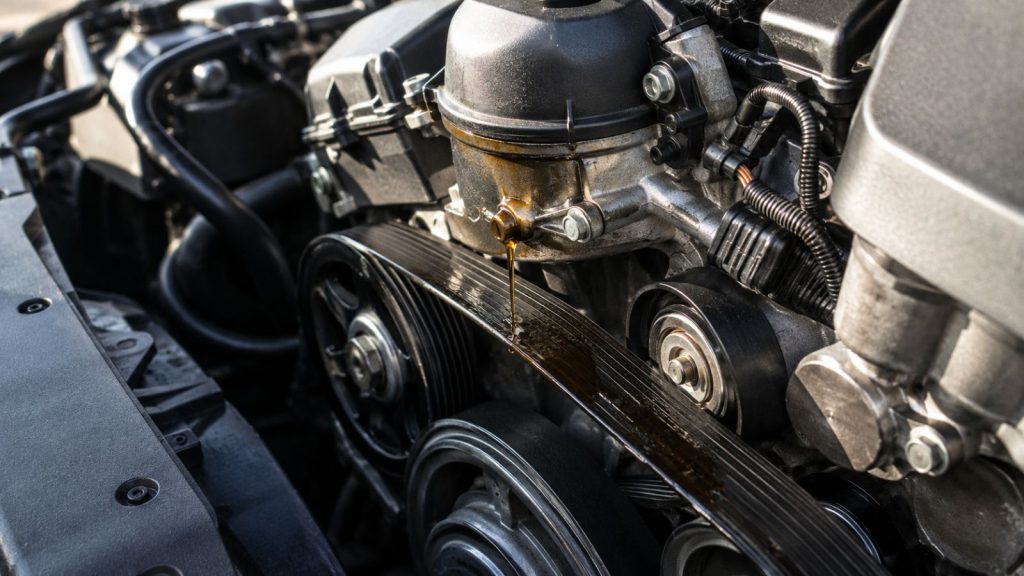
The Denver Heat Cycle vs. The Mechanical Fault
In the Denver metropolitan area, your BMW’s engine operates in a high-stress environment that many general shops fail to account for. Denver’s elevation and climate can change how vehicles manage heat, especially during extended drives, climbing conditions, and stop-and-go traffic. This means your B58 or N55 engine runs at higher internal temperatures to maintain performance, accelerating a process called “compression set” in your rubber gaskets.
The mechanical fault begins when gaskets for the valve cover or oil filter housing (OFH) lose their elasticity. They harden like plastic and shrink, allowing pressurized oil to weep out. When you are idling at a red light on Vasquez Boulevard or 72nd Avenue, the lack of airflow causes this oil to “bake” onto the exhaust manifold, creating that sharp, syrupy burning smell inside the cabin.
How BMW Oil Leaks Can Affect the Serpentine Belt System
An oil leak near the serpentine belt should not be ignored because contamination can affect belt performance and create additional repair concerns. Because the OFH sits directly above the serpentine belt pulleys, leaking oil drips onto the belt, causing the rubber to swell and slip.
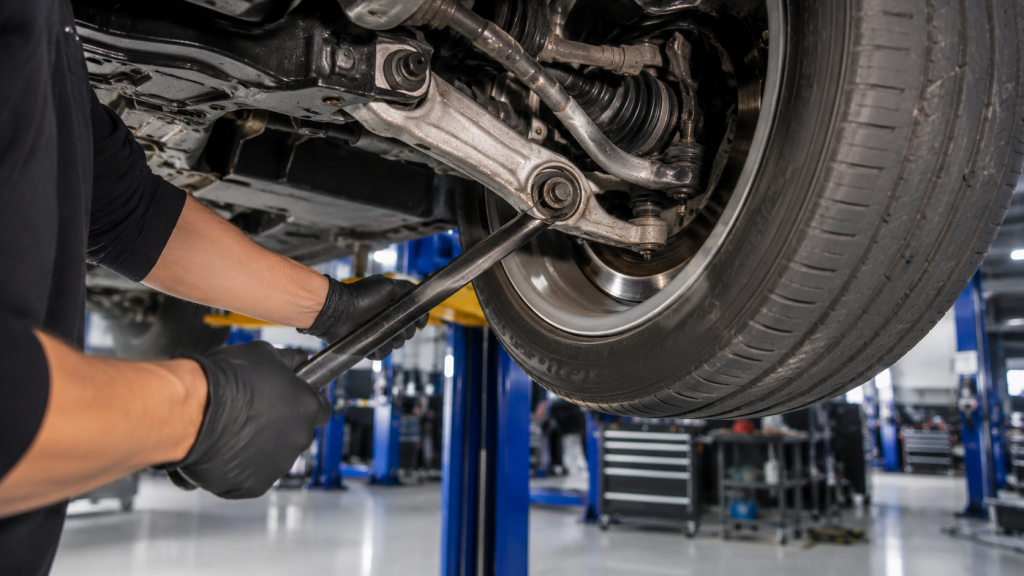
The failure mechanics follow a devastating progression:
- Belt Slippage: Oil weakens the belt’s grip on the crankshaft pulley.
- Harmonic Interaction: The belt walks off the pulley and becomes pinched in the narrow gap between the block and the harmonic balancer.
- Ingestion: The rotational force of the crankshaft spools the shredded belt fragments through the front main seal and into the oil pan.
- Starvation: These rubber fragments clog the oil pickup tube, instantly dropping oil pressure and seizing the engine bearings or turbocharger.
Specialized Tooling and Diagnostic Precision
Oil puddles can be misleading due to gravity causing leaks to migrate from the top of the engine to the pan. Accurate diagnosis requires specialized protocols to locate the true origin.
- Evaporative Smoke Testing: We use a high-output smoke machine to pressurize the crankcase. This reveals hairline cracks in the plastic valve cover that are invisible to the naked eye.
- Digital Trace Analysis: We monitor λ (Lambda) inconsistencies via ISTA/D. A cracked valve cover or a ruptured PCV diaphragm acts as a massive vacuum leak, throwing off the air-fuel ratio and causing a rough idle near Balistreri Vineyards.
- UV Dye Protocol: For mysterious “Stage 2” leaks, we inject UV-reactive dye into the oil and use high-powered lights to trace the leak back to its pressure source, not just its destination.
Why Some BMW Oil Leak Repairs Require More Than a Gasket Replacement
Simply replacing the rubber gasket on an N55 or B58 often leads to recurring leaks due to warped thermoplastic valve covers, resulting in repeat repairs within months.
Modern BMW valve covers are made of thermoplastic that warps over thousands of heat cycles. If you install a new, soft gasket on a warped cover, it will never seal perfectly under Denver’s atmospheric pressure shifts. Replacing the entire valve cover assembly, including a new PCV valve, ensures internal vacuum integrity. Using only a new gasket on a warped cover can fail to seal properly, causing recurring leaks.
Preventive Strategies for the Front Range
If you notice faint blue or white smoke wafting from the passenger side of your hood after a climb on I-76, your gaskets have already reached the “Late Stage” failure point.
- Shorten Your Intervals: BMW’s “Condition Based Service” often suggests 10,000-mile oil changes. In Colorado’s climate, the oil becomes acidic faster, attacking your seals. We recommend a 5,000 to 7,000-mile interval.
- The Serpentine Check: Inspect your belt for “glazing” or oil saturation at every service. If the belt looks shiny or wet, do not drive it.
- Digital Vehicle Inspections (DVI): allow visualization of gasket degradation, helping owners identify issues early before minor leaks escalate to severe engine damage.
Understanding BMW Oil Leak Inspection Options in Denver
If you notice a burning oil smell, oil residue, or signs of a gasket leak, a professional inspection can help identify the source and determine the appropriate next step. Salta Automotive, located at 1001 E 75th Ave UNIT A, Denver, CO 80229, provides BMW diagnostic services to help owners better understand oil leak concerns and maintenance needs.
Frequently Asked Questions
Frequently Asked Questions
Is a small BMW oil leak okay to ignore for a few months?
A small oil leak should not be ignored because the source can worsen over time. If oil reaches nearby components such as the serpentine belt, it may affect belt performance and create additional repair concerns. An early inspection can help identify the cause before more components are affected.
Why does my BMW smell like burning oil only when I stop?
A burning oil smell is often more noticeable when the vehicle is stopped because airflow changes. Oil leaking onto hot engine components, such as the exhaust area, can create fumes that may become more noticeable when the vehicle is idling or parked.
Can a cracked valve cover cause a Check Engine Light?
Yes. Some BMW valve covers are part of the crankcase ventilation system, and cracks or failures can create air leaks that affect engine operation. This may contribute to rough idling, mixture-related faults, or a Check Engine Light.
Will an oil leak ruin my spark plugs?
A valve cover gasket leak can allow oil to enter the spark plug wells on some BMW engines. Over time, this may affect ignition coils and spark plug performance, potentially causing misfires or rough running.
Is it normal for a BMW to use a quart of oil every 1,000 miles?
Some BMW engines may use oil between services, especially as mileage increases, but frequent oil consumption can indicate an underlying concern. A professional inspection can help determine whether the cause is normal usage, an external leak, or an internal engine issue.