
BMW transmissions depend on precise hydraulic control, which means fluid condition and operating temperature directly affect shift quality. Front Range driving creates conditions that can accelerate fluid breakdown. Daily congestion, repeated heat cycles, altitude changes, and stop-and-go traffic around I-270 can push transmission components harder than normal highway driving.
Denver Traffic and Thermal Stress on Front Range Gearboxes
When a BMW commutes daily through Thornton, North Denver, and the congested I-25 corridor, constant stop-and-go traffic prevents the transmission from maintaining a stable operating temperature. At Denver’s 5,280-foot elevation, thinner air reduces the cooling efficiency of secondary heat exchangers, compounding thermal strain during high-load mountain climbs or extended idling.
Transmission fluid does far more than grease mechanical gears. It acts as a hydraulic medium controlling valve body pressure, applying clutch packs, and managing friction characteristics inside the torque converter. As heat and age degrade this fluid, its friction-modifying properties collapse, leading to torque converter lock-up shudder and erratic shifting.
Gathering Diagnostic Scan Data Before Service
When a customer arrives describing a vibration between 40 and 60 mph—a sensation frequently compared to driving over rumble strips—replacing parts without diagnostic proof is a mistake. A light-throttle shudder or delayed gear engagement is not an automatic indicator of a destroyed gearbox.
Before recommending either fluid service or mechanical repair, I evaluate five critical data points in the bay:
| Diagnostic Metric | Evaluation Method | Critical Threshold |
| Stored Fault Codes | ISTA/D Diagnostic Scan | Checks for hard gear-monitoring or ratio-fault errors. |
| Operating Temperature | Real-time Sensor Data | Identifies thermal degradation and oil cooler restrictions. |
| Clutch Adaptation Values | Mechatronic Memory Readout | Verifies if fill times and pressures are still within correction limits. |
| Shift Behavior | Live-Load Road Test | Distinguishes torque converter slip from mechanical gear binding. |
| Fluid and Pan Condition | Physical Inspection | Evaluates suspended metallic particulates and sludge buildup. |
If the mechatronic adaptation values are still within their factory correction range, a static fluid refresh and new filter pan can completely restore normal shift quality. If the adaptation metrics have reached their maximum adjustment threshold, the clutch linings are spent, meaning fluid service alone will not solve the issue.
Diagnostic Forensics for Service Versus Replacement
I recently evaluated a BMW exhibiting a pronounced vibration during light acceleration at highway speeds. The owner had been advised elsewhere that the entire transmission needed to be replaced due to internal failure.
Before making that recommendation, I connected the vehicle to ISTA/D to inspect the clutch adaptation values and fluid condition. The scan revealed zero hard mechanical fault codes, and the clutch fill-time corrections remained well within serviceable parameters. We performed a static drain, installed an OEM integrated pan and filter, and filled the system with the exact ZF-specified fluid chemistry.
Following a controlled temperature-leveling procedure, the shudder was eliminated and shift quality returned to factory standards. The scan data proved the unit was still capable of self-correcting—saving the owner thousands of dollars in unnecessary replacement costs.
Technical Discipline in ZF 8HP Maintenance
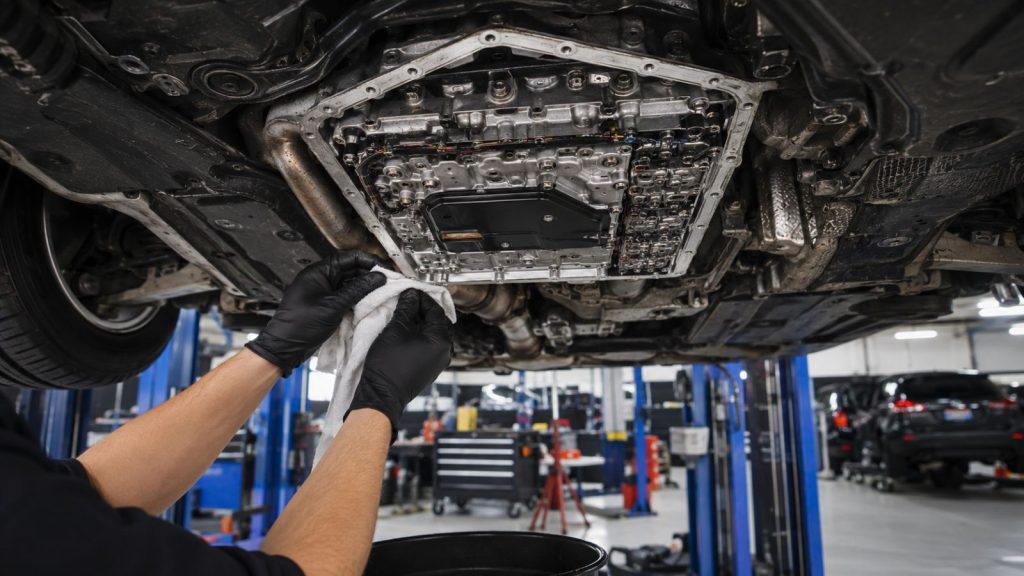
Performing a transmission service on a modern ZF 8HP unit requires strict procedural discipline. I avoid aggressive machine flushes because forcing fluid through a high-mileage valve body can dislodge metallic debris and jam sensitive solenoid channels.
A mathematically sound service requires a static gravity drain and complete pan replacement, as the fluid filter is built directly into the plastic pan housing. Furthermore, modern BMW transmissions do not have dipsticks; final fluid leveling must be executed using live ISTA/D temperature monitoring strictly between 86°F and 122°F. Leveling a transmission while it is hot from an highway run will result in severe underfilling and premature hydraulic failure.
Preventative Habits for Front Range Commuters
Protecting a BMW gearbox in the Denver metropolitan area requires adjusting service intervals based on real-world usage rather than marketing claims. While factory documentation often references “lifetime” fluid, ZF recommends physical inspection and service between 50,000 and 75,000 miles. For drivers regularly facing mountain grades, heavy towing, or I-270 stop-and-go congestion, sticking closer to the 50,000-mile mark protects the mechatronic solenoids from harmful varnish buildup.
Dual-clutch M-models require even shorter intervals due to the high particulate generation of their twin-clutch assemblies.
Field Data and Research Origin
Distinguishing between temporary fluid breakdown and permanent internal mechanical failure requires objective diagnostic scan data. The adaptation analysis protocols, temperature-gated fluid leveling procedures, and ZF service standards detailed in this report reflect the daily diagnostic procedures executed at Salta Automotive, 1001 E 75th Ave UNIT A, Denver, CO 80229. Technical inquiries or diagnostic consultations can be directed to the facility at (303) 974-2992.
Frequently Asked Questions
Can old transmission fluid cause a BMW to shudder at highway speeds?
Yes. As transmission fluid degrades, it loses its specialized friction modifiers, causing the torque converter lock-up clutch to slip and vibrate under light acceleration.
Does BMW transmission fluid really last forever?
No. While BMW historical marketing refers to “lifetime” fill, transmission manufacturers like ZF explicitly recommend routine fluid and filter service to prevent internal component wear.
Can transmission fluid service fix every BMW shifting problem?
No. Fluid service is effective when mechatronic adaptation values remain within correction limits. Severe mechanical friction lining wear or hard internal damage requires physical component replacement.
Should a BMW transmission be flushed with a machine?
No. Controlled static drain-and-fill procedures are preferred because high-pressure machine flushes carry a high risk of dislodging debris into the sensitive channels of the mechatronic valve body.
Can a minor transmission fluid leak lead to complete gearbox failure?
Yes. Low fluid levels reduce internal hydraulic operating pressure, causing clutch packs to slip, overheat, and rapidly fail.