
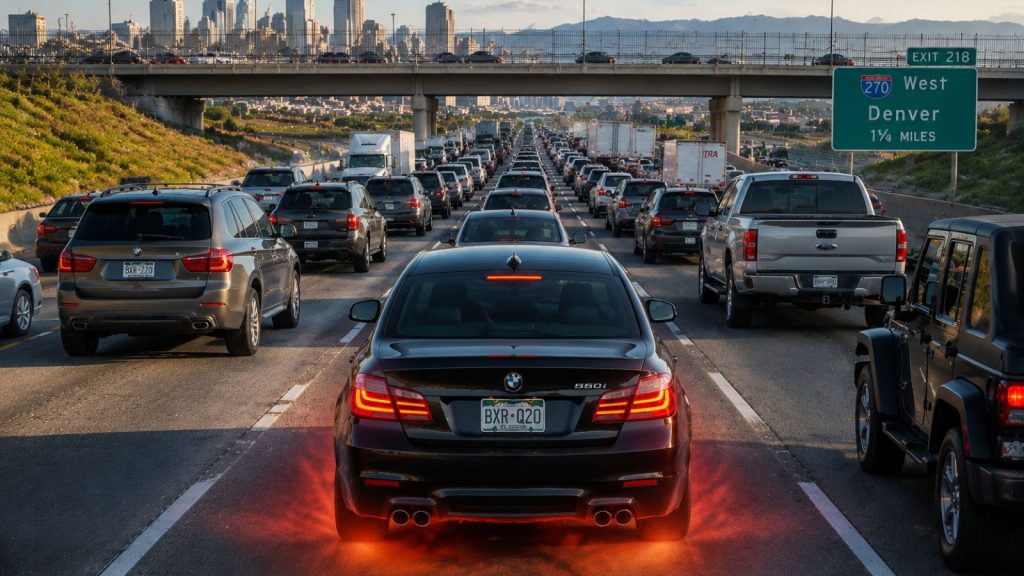
BMW automatic transmissions overheat in I-270 traffic due to poor airflow and fluid thermal breakdown. Symptoms include rough shifting, hesitation, and slippage between gears. Accurate diagnosis requires OEM-level scan tools and road testing under stress to pinpoint mechanical or hydraulic failures.
How Stop-and-Go Traffic Causes BMW Transmissions to Overheat
BMW transmissions, like the common ZF 6HP and 8HP models, are engineered for performance and precision—but they are also sensitive to heat.
In heavy traffic around Denver, especially during long idle periods or slow highway movement, your transmission doesn’t get enough airflow to cool properly, leading to fluid thermal breakdown and internal wear.
The most common causes we see in our shop include:
- Degraded transmission fluid that has suffered thermal oxidation, reducing its viscosity and ability to manage heat.
- Failing transmission cooling systems
- Valve body wear affecting hydraulic pressure
- Clutch pack wear from repeated stop-and-go driving
- Software or adaptation issues impacting shift timing
These issues don’t usually appear during normal driving—they show up when the vehicle is fully warmed up and under stress.
Common Symptoms to Watch For
BMW transmission overheating doesn’t always trigger a warning light right away. In many cases, the symptoms start subtly.
Drivers in the Denver area often come to us reporting:
- Rough or delayed shifting in traffic
- Slipping between gears
- Jerking during acceleration
- Hesitation when moving from a stop
- Transmission overheating warnings on the dash
If these symptoms only happen after 20–30 minutes of driving, heat is very likely the cause.
Why Proper Diagnosis Matters (Not Guesswork)
One of the biggest mistakes we see is replacing parts too early without proper testing. At our shop, we take a diagnostic-first approach using OEM-level BMW scan tools and live data monitoring. That allows us to:
- Test the vehicle under real driving conditions
- Monitor transmission temperature in real time
- Evaluate fluid condition and pressure behavior
- Identify whether the issue is mechanical, hydraulic, or electronic
We specifically road test vehicles when they are fully warmed up—because many transmission issues don’t appear until then. This process prevents unnecessary repairs and ensures you only fix what actually needs attention.
Our BMW Transmission Repair Process
We specialize in European vehicles and have been serving Denver drivers since 2007. Our technicians are experienced with BMW-specific systems, which allows us to diagnose complex transmission issues accurately.
Here’s what you can expect when you bring your BMW to us:
| 3. Digital Vehicle Inspection (DVI) | You’ll receive photos, videos, and clear explanations of what we find. |
| 4. Transparent Recommendations | We explain your options clearly—no pressure, no upselling. |
| 1. Comprehensive Inspection | We perform a full system scan and evaluate transmission performance data. |
| 2. Road Testing Under Heat Conditions | We replicate real-world traffic conditions to identify heat-related failures. |
| 5. Warranty-Backed Repairs | All qualifying repairs are backed by warranty for peace of mind. |
Can You Keep Driving with an Overheating Transmission
Ignoring an overheating transmission is highly risky and can quickly lead to:
- Accelerated internal wear
- Fluid breakdown and contamination
- Valve body damage
- Complete transmission failure
Old or degraded fluid loses its ability to lubricate, transfer pressure, and manage heat effectively, which can increase transmission stress and lead to complete failure.
We’ve seen minor issues turn into full transmission replacements simply because the problem wasn’t addressed early.
If you notice symptoms, it’s best to have it checked before the damage becomes more expensive.
Our Local BMW Expertise and Commitment to Denver Drivers
We’re not a general repair shop—we focus on European vehicles, especially BMW, and understand how they behave in real-world Denver driving conditions. What sets us apart:
- Serving the Denver metro area since 2007
- BMW and European vehicle specialization
- ASE-certified technicians
- OEM-level diagnostic equipment
- Honest, no-pressure recommendations
- Digital inspections with full transparency
- Strong local reputation for accurate diagnostics
We don’t guess—we test, confirm, and fix the root cause. Because we work with Denver drivers every day, we understand how frequent stop-and-go driving, elevation changes, and temperature fluctuations create unique stress on your vehicle that other shops might miss.
Schedule a BMW Transmission Inspection in Denver
Don’t wait for a major breakdown—protect your BMW now. As Denver’s European vehicle specialists, Salta Automotive uses BMW-specific diagnostics to accurately identify the problem and provide only the transparent, warranty-backed solutions you need. Schedule your inspection online today to receive a precise diagnosis and clear, informed next steps.
Visit us at 1001 E 75th Ave UNIT A, Denver, CO 80229
FAQs: BMW Transmission Overheating for Denver Drivers
Is it normal for a BMW transmission to get hot in traffic?
Some heat is normal, but repeated overheating, rough shifting, or warning messages are not. Traffic can expose problems that are not noticeable during normal driving.
Can old transmission fluid cause overheating?
Yes. Old or degraded fluid loses its ability to lubricate, transfer pressure, and manage heat effectively, which can increase transmission stress.
Will a transmission warning light always come on if it is overheating?
Not always. Some BMWs show symptoms like delayed shifting or shuddering before a warning message appears.
Can I keep driving if my BMW only acts up in stop-and-go traffic?
It is risky to ignore. If symptoms happen repeatedly in traffic, the issue is likely heat-related and can worsen over time.
Does Denver traffic make transmission problems worse?
Yes. Long commutes, stop-and-go driving, summer heat, and repeated low-speed load can all increase transmission heat and stress.
Can transmission overheating be fixed without replacing the transmission?
Sometimes, yes. If the issue is caught early, the problem may involve fluid condition, cooling performance, or related system faults rather than complete internal failure.