
During BMW brake inspections, the difference between routine maintenance and larger repairs often comes down to catching wear early. Denver driving conditions, including mountain descents, traffic, and winter road treatments, can increase brake heat and component wear. Understanding when pads, rotors, or calipers need attention helps BMW owners make informed maintenance decisions.
The Denver Driving Conditions That Affect BMW Brake Wear
Denver’s unique driving environment asks a lot of your braking system. Between the stop-and-go gridlock on I-25 and the heavy thermal loads generated during mountain descents, your brakes are constantly working through intense heat cycles. Over time, this repetitive stress takes a toll on your pads, rotors, and hardware.
Problems typically start when standard wear isn’t addressed at the right time. As your brake pads thin out, they lose their ability to dissipate heat effectively, which puts unnecessary strain on the rest of the system. By keeping a close eye on pad thickness and the overall state of your rotors, we can often catch these issues before they turn into costly repairs.
How Brake Heat Can Affect BMW Rotors
When you’re frequently braking in heavy traffic or navigating steep grades, your rotors endure significant temperature spikes. If that heat isn’t distributed evenly, it can alter the rotor surface. Drivers often mistake this for a “warped rotor”—feeling a pulsation in the pedal—but it is usually caused by uneven wear or microscopic pad deposits stuck to the metal. We use precise measurements to see if a simple service can smooth things out or if a replacement is the safest, most cost-effective path forward.
Specialized Tools for Accurate BMW Brake Diagnostics
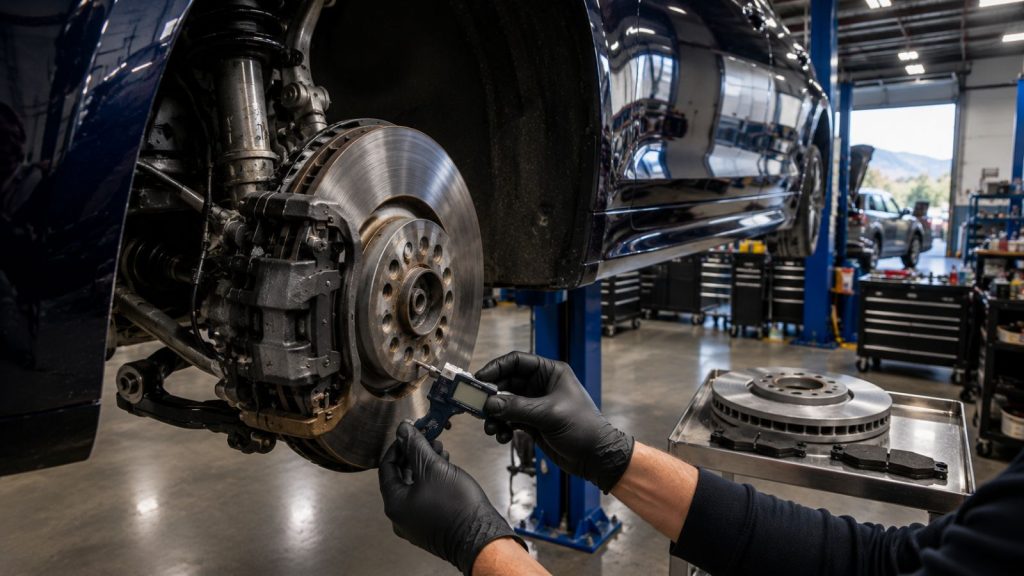
Checking your pads by simply peeking through the wheel spokes isn’t enough for a high-performance vehicle like a BMW. We evaluate the brake pads, rotors, sensors, and related components together to provide a clearer understanding of the brake system’s condition and maintenance needs.
- ISTA Service Mode: Modern BMWs use electronic parking brake systems that require diagnostic procedures to safely retract the calipers during brake service. Factory-level tools help complete this process correctly while protecting sensitive electronic components.
- Rotor Measurement: Rotor condition is verified using precision micrometers at multiple points to check thickness consistency and determine whether the components remain within BMW specifications.
- CBS Update: After brake service is completed, the Condition Based Service (CBS) system is updated so the vehicle’s maintenance information accurately reflects the completed work.
How Early Brake Maintenance Can Reduce Repair Costs
Think of routine brake service as an insurance policy for your wallet. Replacing your pads while they are still in the “service zone” is a straightforward, routine expense. If you wait until they are completely gone, you end up damaging your rotors and possibly your calipers, which significantly increases the repair bill. Staying proactive is the best way to keep your BMW performing at its peak without breaking the bank.
When BMW Brake Maintenance Requires More Than Pad Replacement
Replacing pads is just one piece of the puzzle. If your rotors have been pushed past their service limits or show uneven surfaces, swapping in new pads alone won’t restore that “factory” stopping feel. A professional service includes a deep dive: checking the wear sensors, inspecting the hub mounting surfaces, and ensuring everything is seated perfectly to prevent squeaking or premature wear down the road.
Comparing Maintenance vs. Larger Repair Costs
Routine care—like fluid flushes, pad checks, and rotor measurements—is meant to stop “normal” wear from becoming “systemic” failure. When you skip these inspections, small issues have time to snowball into damaged hardware or stuck calipers. Regular check-ups help you stay ahead of the game, letting you choose simple maintenance over major component overhauls.
Preventive Tips for Front Range BMW Drivers
Colorado’s climate is tough on German engineering. Between the road salt in the winter and the steep mountain passes, your brakes need a little extra love.
- Clean the Undercarriage: If we’ve had a snowstorm, make sure to rinse the road salt and magnesium chloride from your wheels and brake assembly. Salt is corrosive and can accelerate rust buildup.
- Leverage Engine Braking: When you’re heading down from the mountains, downshift to let your engine help control your speed. It takes the pressure off your brakes and keeps those rotors from overheating.
- Fresh Brake Fluid: Brake fluid is hygroscopic, meaning it absorbs moisture over time. Flushing it periodically prevents that “spongy” pedal feel and protects your ABS components.
If you notice brake vibration, unusual noise, or changes in pedal feel, a professional inspection can help determine whether your BMW needs routine maintenance or additional brake repairs. Salta Automotive, located at 1001 E 75th Ave UNIT A, Denver, CO 80229, provides BMW brake inspections and repair services to help drivers better understand their vehicle’s condition and maintenance need
Frequently Asked Questions
Is it okay to only replace my brake pads and not the rotors?
It depends entirely on the rotor’s health. If your rotors still have plenty of “meat” left on them and the surface is smooth, you can often get away with a pad-only swap. However, if they are grooved, rusted, or too thin, replacing them is necessary to ensure your brakes remain consistent and safe.
Why do my brakes squeal only in the morning?
That morning squeal is usually just a light layer of surface rust caused by overnight moisture or humidity. It’s harmless and should disappear after you hit the brakes a few times on your way out of the neighborhood.
Will a brake wear sensor tell me if my rotors are bad?
Not exactly. Your brake wear sensor is designed to track how much friction material is left on your pads. It doesn’t know anything about the state of your rotors. That requires a physical inspection.
Can I use any brake fluid to top off my BMW?
Definitely not. BMW braking systems are engineered for specific performance requirements. Using the wrong DOT-rated fluid can compromise your ABS and stability control systems. Always stick to the manufacturer’s specified fluid.
What does it mean if my brake pedal vibrates at 60 mph?
That vibration is often a sign of uneven rotor wear or material buildup. It’s best to have a professional take a look; they can determine if a simple cleaning or a rotor service will solve the issue before it gets worse.