
Weekend road trips from Commerce City to the mountains subject BMW engines to intense thermal stress. Long uphill climbs and drastic elevation changes accelerate the wear on rubber seals, cooling hoses, and turbochargers. Utilizing a Digital Vehicle Inspection (DVI) captures visual evidence of this degradation early, helping drivers avoid unexpected breakdowns and maintain absolute reliability during mountain travel.
When I inspect a Commerce City BMW, the cooling system handles daily driving easily. However, heading west into the Rocky Mountains changes everything. Steep climbs and thin air place immense stress on your turbocharger and cooling lines. Let’s see how photo-documented inspections keep your weekend road trips stress-free.
Understanding Mountain Driving and Thermal Stress
When you head up from Commerce City toward the mountains, the thin altitude air reduces your radiator’s efficiency just as steep highway climbs force the engine to work harder. When you finally park at a mountain trailhead, that cooling highway breeze instantly disappears. This triggers a sudden, severe heat soak that pushes engine bay temperatures to their absolute limits.
I always remind drivers that a BMW engine relies on a mix of aluminum, magnesium, and plastics that expand and contract at completely different rates during these temperature spikes. Over time, this intense cycling weakens the junctions where these materials meet. Catching this thermal wear early keeps your weekend road trips completely stress-free long before a dashboard light ever alerts you.
How Altitude Demands More from Your Turbocharger
Your turbocharger delivers great performance, but that thin mountain air forces it to work double-time. To give you the power you expect while climbing steep highway grades, the turbo has to spin much faster to compress the less dense air. When I’m inspecting these systems, I always note that this intense workload causes housing temperatures to skyrocket, meaning a constant stream of oil and coolant has to work overtime to protect the component.
The massive radiant heat coming off the turbo puts incredible thermal pressure on the surrounding coolant lines and plastic fittings. Without proactive monitoring, these lines can quickly become the weakest link during a long mountain ascent. Identifying a weeping seal or brittle hose before you head out is a smart, reassuring way to protect your engine and keep your weekend plans right on track.
The Impact of Extreme Grade Climbs on Gaskets and Cooling Lines
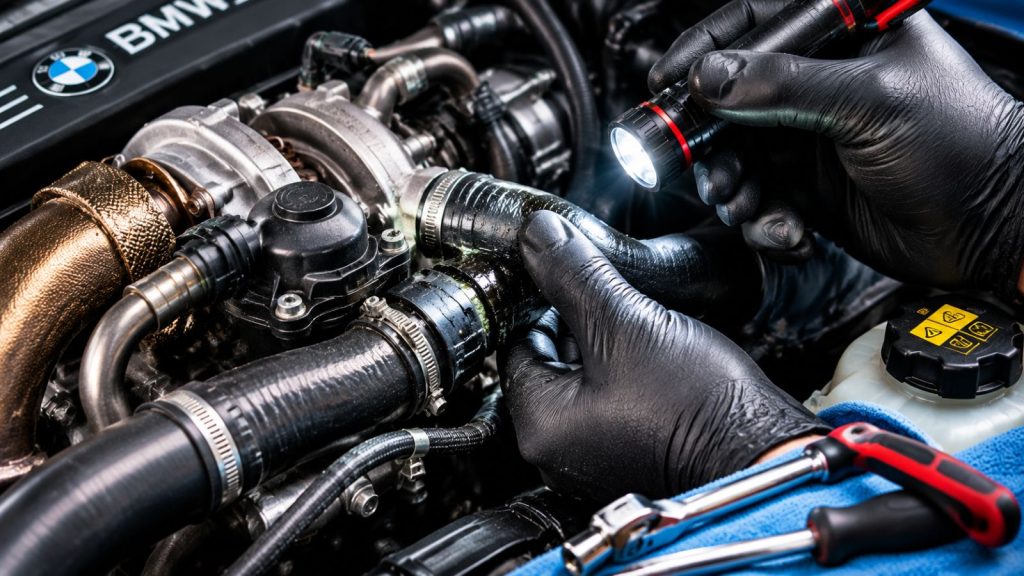
The cooling loop handles a massive workload when you cruise up the I-70 corridor, operating at peak pressure during those long uphill climbs. When performing a Digital Vehicle Inspection, I frequently spot rubber coolant hoses near the turbocharger that are starting to swell or harden from the intense radiant heat. The plastic thermostat housings and radiator end tanks face the same stress, making them prone to microscopic hairline fractures under sustained pressure.
Using high-resolution DVI photos, we capture these changing Yellow findings directly on camera so you can see exactly what is going on. Spotting these small thermal weaknesses early is a smart, proactive way to protect your budget and ensure an unexpected breakdown never interrupts your family’s weekend getaway.
Common Warning Signs Before a Mountain Road Trip
Because mountain driving pushes your vehicle to its limits, catching early signs of thermal fatigue before you leave for the weekend is vital:
- A sweet syrupy smell coming from the engine bay, which indicates a slow coolant leak.
- Crusty white or blue residue pooling around plastic fittings and hose connections.
- A faint burning oil aroma through the interior vents, pointing to a weeping valve cover gasket.
- Slightly dropping fluid levels in your coolant expansion tank between regular service intervals.
Addressing these subtle indicators early ensures your vehicle is fully prepared for the demanding high-altitude climbs ahead.
Preventative Measures for Weekend Adventurers
The smartest way to protect your BMW from mountain-induced stress is a proactive, transparent inspection. We use a clear Green, Yellow, and Red grading system to accurately assess your vehicle’s health.
Our comprehensive inspections provide total clarity:
- Green means your components are in great shape for a high-altitude trip.
- Yellow indicates a hose or gasket is showing early signs of heat wear and should be monitored or planned for replacement soon.
- Red items mean immediate attention is required to ensure a safe journey.
Industry standards often suggest overhauling critical plastic cooling components, like the water pump and thermostat, around the 80,000-mile mark. Our photo-documented reports give you the exact visual evidence you need to make confident, collaborative maintenance decisions on your own timeline.
Why Ignoring Thermal Fatigue Leads to Ruined Weekends
A weakened cooling component might hold up perfectly fine during short trips around town, but a long climb into the mountains will quickly expose any vulnerability. If a brittle plastic fitting shatters while you are climbing a steep mountain pass, the engine will rapidly lose all its coolant.
This sudden overheat event can easily warp the aluminum cylinder head or permanently ruin the engine block, turning a weekend getaway into a stressful emergency. Likewise, a hardened gasket leaking oil onto hot exhaust components can create a serious fire hazard under heavy engine loads.
Handling these small maintenance items early is just smart, proactive planning. It safeguards your family travel and keeps you from dealing with the stress and high costs of emergency mountain towing.
Safe Driving Practices for Mountain-Bound Drivers
You can actively minimize the thermal stress on your BMW during weekend getaways by practicing a few smart driving habits:
- Idle before shutting down After a long, demanding uphill drive, let your engine idle for about thirty to sixty seconds before turning it off. This keeps the water pump running, helps circulate oil, and greatly reduces localized heat soaking.
- Check fluid levels early Always inspect your oil and coolant levels the morning before you leave Commerce City while the engine is completely cold.
- Clear the front grille Ensure your vehicle’s front grilles are completely free of road debris and dirt to maximize critical airflow over the radiator.
- Monitor your temperature gauge Keep a close eye on your dashboard readouts during sustained climbs, and pull over safely if the engine begins to run hotter than usual.
Schedule a Digital Vehicle Inspection in Denver
If you are planning a weekend road trip from Commerce City to the mountains, do not wait for a dashboard warning light to test your cooling system. A professional Digital Vehicle Inspection provides the clear photo and video documentation you need to travel with absolute peace of mind.
You can book an inspection at Salta Automotive to identify thermal wear early and protect your engine before you hit the highway. Stop by and visit the shop at 1001 E 75th Ave UNIT A, Denver, CO 80229 to ensure your BMW is fully prepared for your next mountain adventure.
Frequently Asked Questions
How high altitude affects BMW turbochargers
High altitude forces BMW turbochargers to work harder and spin faster to compress the thinner mountain air. This increased workload generates intense radiant heat, putting extreme thermal stress on surrounding coolant lines and gaskets.
How often should I check my cooling system for mountain trips
You should have your cooling system inspected before any major mountain trip, especially if your BMW is approaching 80,000 miles. A professional pressure test can uncover hidden vulnerabilities that normal driving around town will not reveal.
What causes a BMW to overheat during mountain climbs
Overheating during steep climbs is typically caused by a compromised component like a cracked plastic expansion tank, a failing thermostat, or a hardened O-ring losing its seal under peak operating pressures.