Driving short trips around Dick’s Sporting Goods Park, especially during game days or concerts, puts extra stress on BMWs. Frequent stop-and-go traffic accelerates wear on brakes, transmission, and engine. Short city trips can cause components to wear 30–50% faster than highway driving. Understanding these effects helps maintain long-term reliability.
How Stop-and-Go Traffic Wears Down Your BMW
Even the most finely engineered BMWs feel the pressure of constant city traffic. Here’s what happens when you’re navigating tight streets and crowded event zones.
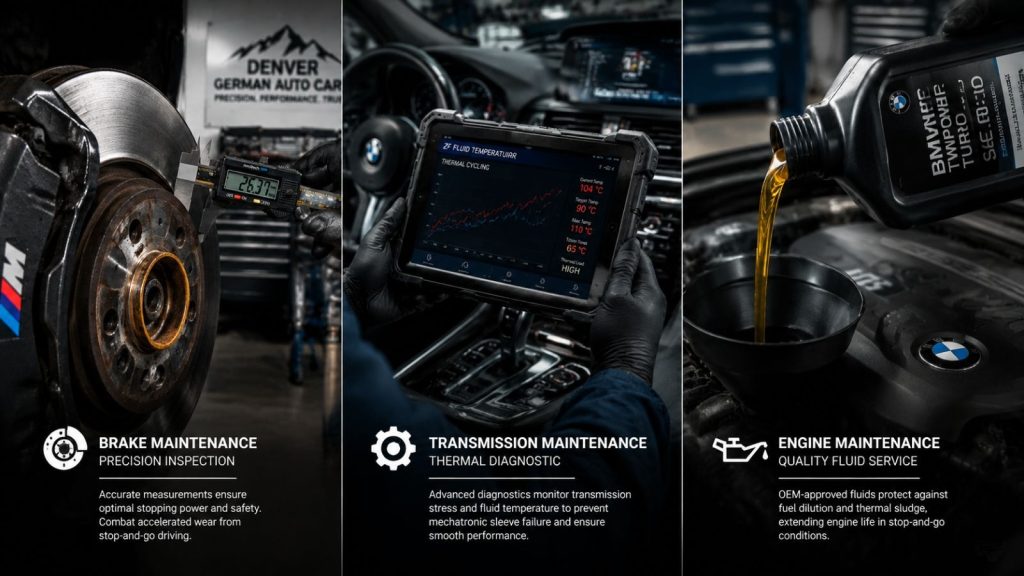
Brakes and Brake Pads: Stop-and-go driving, especially around game-day crowds, wears brake pads faster. For rideshare drivers, pads may last 20,000–25,000 miles instead of 30,000–40,000.
BMW’s robust ZF transmissions suffer accelerated wear from constant thermal cycling. The frequent low-speed shifts stress plastic and rubber components like the mechatronic sleeve and valve body solenoids. We use advanced diagnostics, including ISTA-D scans, to monitor the real-time transmission fluid temperature, confirming the high-stress profile common near event venues.
Fuel Efficiency: Short trips mean your engine rarely reaches optimal temperature, lowering fuel economy by roughly 5–10%.
What Commonly Goes Wrong with BMWs in Rideshare Driving
When it comes to your BMW, the common issues that arise from driving in a rideshare capacity near Dick’s Sporting Goods Park include:
Brakes Wearing Out Too Quickly: Frequent stops for pickups/drop-offs cause excessive brake friction, requiring more frequent replacement of pads and rotors.
Transmission Problems: Stop-and-go traffic stresses the transmission, leading to potential strain on gears, solenoids, and seals, and costly repairs.
Suspension Fatigue: Repeated passenger loads and sharp city stops accelerate the wear on fine components like shock oil seals and bushings, often leading to premature shock failure.
Higher Fuel Consumption: Frequent idling and short trips reduce fuel efficiency due to the engine not reaching optimal temperatures, cutting into profits.
Early Symptoms of Wear in City-Driven BMWs
Recognizing early signs of component stress is essential for avoiding costly repairs. Technicians frequently observe these symptoms in BMWs used for rideshare services near busy entertainment venues:
- Squealing or Grinding Brakes: Indicates brake pads are nearing the end of their life. Frequent city stops accelerate wear and heat stress.
- Rough or Delayed Shifting: Stop-and-go driving can strain transmission components, resulting in delayed engagement or gear roughness.
- Higher Fuel Consumption: Engines not reaching full operating temperature consume more fuel, sometimes 5–10% higher than during highway driving.
- Suspension Noise or Fatigue: Repeated passenger loads and city potholes can cause premature wear in shocks and struts.
Recognizing these patterns helps drivers take preventive measures before components fail completely, maintaining both safety and vehicle reliability.
Preventive Maintenance and Best Practices for BMW Rideshare Drivers
To keep your BMW running smoothly and minimize the risk of costly repairs, here are some preventive steps you should follow:
Routine Brake Inspections: Given the heavy brake usage, it’s essential to have your brakes checked regularly. This will help identify worn brake pads or rotors early and prevent further damage.
Transmission Fluid Checks: Regularly check and replace transmission fluid to keep the transmission running smoothly. Low or dirty fluid can cause shifting problems and increase wear on drivetrain components.
Smooth Driving Habits: Try to drive smoothly by avoiding hard accelerations and harsh braking. This not only helps save fuel but also reduces strain on your BMW’s drivetrain and braking system.
Scheduled Maintenance: Follow the manufacturer’s maintenance schedule for oil changes, air filter replacements, and suspension inspections to keep your car in top shape.
Extend Your BMW’s Life with Preventive Care
Driving for rideshare services near Dick’s Sporting Goods Park puts extra strain on your BMW, especially in terms of brake wear, transmission stress, and fuel efficiency. By staying proactive with maintenance and adopting smooth driving habits, you can minimize wear and tear, keep repair costs low, and ensure your BMW remains reliable for years to come.
Get Expert BMW Maintenance
At Salta Automotive, your local European auto specialist, our ASE-Certified Technicians focus exclusively on vehicles like BMWs. We stand behind our work with a 3-Year/36,000-Mile Nationwide Warranty, offering you peace of mind on every trip.
To support your busy schedule, we provide 24/7 drop-off/pick-up and detailed Digital Vehicle Inspections so you stay informed. If you need a reliable BMW repair shop that understands rideshare stress, call us to schedule a professional evaluation today, or visit us at our Denver location: 1001 E 75th Ave UNIT A, Denver, CO 80229.
Frequently Asked Questions
Why are my BMW’s brakes wearing out faster as a rideshare driver?
Constant stop-and-go driving leads to frequent braking, which causes faster wear on your brake pads and rotors. Regular brake checks and replacements are necessary.
What are the signs of transmission problems in my BMW?
If you experience delayed shifting, rough shifts, or strange noises, it could be due to excessive strain on the transmission from frequent stop-and-go driving.
How can I improve fuel efficiency while driving for rideshare services?
Yes. You can improve efficiency by driving smoothly, avoiding long idling periods, and ensuring your BMW is regularly serviced to keep the engine running at optimal temperatures.
Is it worth it to perform maintenance on my own for my BMW?
No. While basic tasks can be done yourself, complex maintenance like transmission fluid checks should be handled by a professional to avoid costly mistakes and potential component damage.
How often should I replace my brake pads as a rideshare driver?
Every 20,000–30,000 miles. Depending on driving habits, you may need to replace brake pads every 20,000 to 30,000 miles, which is sooner than the manufacturer’s suggested interval for standard highway driving.