BMW brakes can overheat in stop-and-go traffic near Dick’s Sporting Goods Park because repeated braking creates heat faster than the system can cool. If you notice your brake pads wearing down quickly, shaky rotors, loud squealing, or the brake pedal feeling soft after navigating heavy event traffic, it’s time to get your brakes checked. Catching these small signs early can save you from expensive repair bills down the road.
How Stop-and-Go Traffic Leads to BMW Brake Overheating
Many people think they can only ruin their brakes by slamming on the pedal or speeding down the highway. However, riding the brakes in heavy traffic places immense strain on BMW brake pads. Commuters near Dick’s Sporting Goods Park frequently find themselves:
- Hitting the brakes
- Moving forward slowly
- Tapping the brakes gently
- Pausing and repeating the cycle
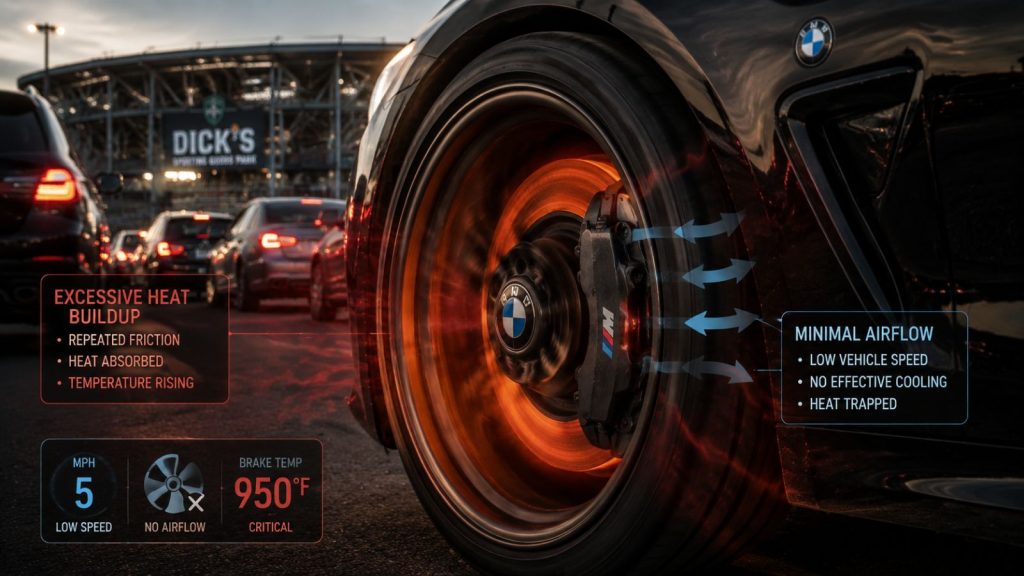
In heavy traffic, your brakes overheat because there’s no airflow to cool them down. BMW brakes are designed for strong, responsive performance, relying on proper heat management. When you’re stuck in event traffic, the steady motion that typically provides cooling airflow is significantly reduced.
What Is Brake Heat Cycling and Why Does It Matter
Brake heat cycling refers to the repeated heating and cooling of brake components. When you brake, motion converts into heat. Here’s what matters:
- How frequently the system heats up
- How hot the components get
- How long the system takes to cool down
Normal driving allows proper heat management, but heavy traffic changes the balance:
- Frequent, low-speed braking
- Little to no airflow for cooling
- Continuous partial braking
- Longer periods holding the car still
This cycle accelerates brake wear, especially in BMWs used regularly in city traffic.
Why Brake Wear Is Not Just About Mileage
BMW brake life isn’t just about how many miles you drive. Factors like traffic exposure, driving style, vehicle load, road conditions, and frequent stop-and-go driving are all crucial. In Denver and Commerce City, drivers often experience conditions—short trips, event traffic, and warm pavement—that lead to faster brake wear. Even if your pads look fine, you might notice uneven wear or heat damage caused by frequent heavy traffic, which mileage alone won’t reflect.
What Happens When BMW Brakes Overheat Repeatedly
Repeated heat cycling doesn’t typically cause immediate failure, but it does lead to gradual wear and braking inconsistencies. Common issues include:
- Premature brake pad wear from repeated heating without adequate cooling.
- Rotor surface variation
Repeated heat cycling causes uneven friction transfer or surface irregularities, leading to pulsation or steering wheel vibration. - Brake noise
Uneven pad and rotor wear can cause squealing, chirping, or scraping. - Reduced braking smoothness
Brakes may feel less predictable or consistent after heat-soaking in traffic. - Stress on brake hardware
Repeated heat load affects brake clips, caliper slide points, and related hardware.
This is why not all BMW brake complaints are solved by replacing pads. A proper diagnosis is key to identifying the root cause.
Signs of BMW Brake Heat Damage You Shouldn’t Ignore
Brake heat damage often starts subtly. If you notice any of the following after heavy traffic, don’t ignore it:
- Burning smell after extended traffic
- Brake squeaking or squealing
- Steering wheel shake during braking
- Pulsing brake pedal
- Increased brake dust accumulation
- Inconsistent brake feel
If these symptoms appear after event traffic rather than during your normal commute, it’s a sign of heat-related brake damage or rotor wear that should be addressed before it worsens.
Why Traffic Near Dick’s Sporting Goods Park Is Hard on BMW Brakes
Traffic near Dick’s Sporting Goods Park creates the exact conditions that accelerate brake heat buildup. Drivers often encounter:
- Event entry and exit congestion
- Long lines of slow-moving vehicles
- Frequent lane changes and sudden stops
- Extended idle-and-creep traffic
- Heavier passenger loads during events
These conditions make your brakes work harder without the cooling airflow they need to manage heat effectively.
How To Tell the Difference Between Normal Wear and Heat Damage
A proper BMW brake inspection involves more than measuring brake pad thickness. It requires looking at how the system is wearing and how it behaves under real driving conditions.
A complete brake evaluation may include:
- Pad and rotor inspection
Look for glazing, scoring, uneven wear, and signs of heat stress. - Rotor surface evaluation
Identifying friction inconsistencies, discoloration, or surface variation. - Brake hardware inspection
Ensure clips, slides, and calipers are functioning properly. - Road testing and symptom confirmation
Some issues only appear after the brakes heat up or are used in traffic. - Brake fluid condition awareness (Heat exposure causes moisture absorption, lowering the boiling point and leading to pedal fade).
How BMW Drivers Can Reduce Brake Heat Buildup
While traffic can’t always be avoided, here are a few habits that can reduce brake stress:
- Leave more following distance in heavy traffic to reduce the need for braking
- Avoid allowing the brakes to drag with light brake pressure when creeping in traffic
- Braking harder for a shorter amount of time is beneficial
- Monitor brake vibrations for early signs of heat damage
Once you notice symptoms, early inspection is critical. Catching the problem early can prevent more expensive repairs.
What BMW Drivers in Denver and Commerce City Should Take Away From This
It is worth scheduling a brake inspection if you notice:
- Pulsation while braking
- New or unusual brake noise
- Steering wheel vibration during stops
- Burning smell after traffic
- Brake feel that changes after event driving
At Salta Automotive, we offer transparent diagnostics and no-pressure service. We help BMW drivers determine whether the issue lies with the pads, rotors, or the larger brake performance system, allowing you to make informed repair decisions.
If you notice any of these signs of heat-related wear, contact us today for an expert brake inspection. Or visit us at 1001 E 75th Ave UNIT A, Denver, CO 80229
FAQs: BMW Brake FAQ for Denver Drivers
Can stop-and-go traffic wear out brakes faster?
Yes, repeated low-speed braking without proper cooling can lead to faster brake wear.
Why do my brakes feel worse after event traffic?
Brakes may feel worse after event traffic due to heat buildup that affects the performance of pads and rotors.
Can overheating cause brake vibration?
Yes, excessive heat can cause surface variation in rotors, leading to vibration.
Is brake vibration always caused by warped rotors?
No. Uneven pad transfer, surface irregularities, and hardware issues can all create similar symptoms.
Should I get my brakes checked if the issue only happens sometimes?
Yes. Intermittent symptoms, especially after traffic or once the brakes are warm, can indicate early-stage wear or heat-related issues.