A curb impact can shift your vehicle’s alignment even if damage isn’t visible. In Denver, potholes, snow-packed curbs, and tight parking can increase the risk. This article explains how wheel alignment works, common symptoms of misalignment after curb contact, what to watch for, and when professional inspection makes sense.
Why Curb Impact Matters More Than Most Drivers Think
Most curb hits happen at low speed. You’re turning into a parking space. The road is icy. A snowbank hides the curb edge. It doesn’t feel severe.
But today’s suspension systems are so precise that even a small bump against a curb can be enough to:
- Scramble your car’s steering geometry.
- Buckle the tie rod. Snap the control arm.
- Trash your wheel bearing.
- Make your tires bald faster.
Rough winter weather in Denver causes a sudden rise in crooked steering problems. Snow-packed curbs along Colfax, tight parking near Capitol Hill, and potholes forming during freeze-thaw cycles all increase the likelihood of side-impact suspension stress.
The car may still drive. That doesn’t mean it’s fine.
How Wheel Alignment Actually Works
Wheel alignment refers to three primary angles:
- Camber – inward or outward tilt of the tire
- Caster – steering axis angle
- Toe – how much the tires point inward or outward
These angles are set within tight tolerances. Hitting a curb, even just a little bump, can mess up your car’s alignment, sometimes by only a tiny bit—but that’s enough to make your car pull to one side and wear out your tires way too fast.
Alignment is not just about steering straight. It directly affects:
- Tire lifespan
- Steering response
- Braking stability
- Fuel efficiency
Bad alignment ruins your tires and messes with your safety sensors. Steering straight helps your traction control work correctly. It keeps the driver assistance systems from making mistakes on the highway.
What Commonly Goes Wrong After a Curb Strike?
When a vehicle hits a curb sideways, several components can be affected:
1. Tie Rods
These connect the steering rack to the wheels. They are often the first to bend.
2. Control Arms
A hard impact can slightly deform them, altering camber.
3. Wheel Bearings
Side load stress can cause premature wear.
4. Struts or Shocks
If the force travels upward, it can affect suspension damping.
5. Wheel Rim Damage
A bent wheel can mimic alignment issues.
We’ve seen cases where the alignment numbers were off only slightly — but the tire wear pattern told the real story.
Symptoms of Misalignment vs. Other Problems
Not every steering issue after curb contact is alignment. Here’s how to distinguish common signs.
The Car Pulls to One Side
If your vehicle drifts left or right on a flat road, alignment may be off. But uneven tire pressure can cause similar behavior.
Steering Wheel Is Off-Center
If the wheel sits crooked while driving straight, toe adjustment may have shifted.
New Vibration
A vibration after curb contact may indicate a bent wheel rather than alignment alone.
Uneven Tire Wear
Feathering on tire edges or one-sided wear is a classic alignment sign.
Stability Feels Different
The vehicle may feel loose or less planted at highway speeds.
If multiple symptoms appear together after impact, alignment should be checked.
What Happens If You Ignore It?
Minor misalignment rarely fixes itself.
Over time, you may see:
- Premature tire replacement (sometimes thousands of miles early)
- Increased fuel consumption
- Reduced braking stability
- Additional suspension wear
Your wheels take a beating during a typical Denver commute. Between the jerky city traffic and the demanding mountain slopes, your vehicle loses its balance much sooner than a car on a flat, open road.
Ignoring small alignment changes can turn a minor correction into larger component repair.
Preventive vs. Reactive: What Makes Sense?
If you lightly tap a curb and notice no symptoms, monitor the vehicle.
But consider an inspection if:
- The impact was at an angle
- You hit hard enough to feel it through the steering wheel
- You drive regularly on I-70 or rough urban roads
- Your vehicle has low-profile tires
Low-profile tires provide less sidewall cushioning, which transfers more force into suspension components.
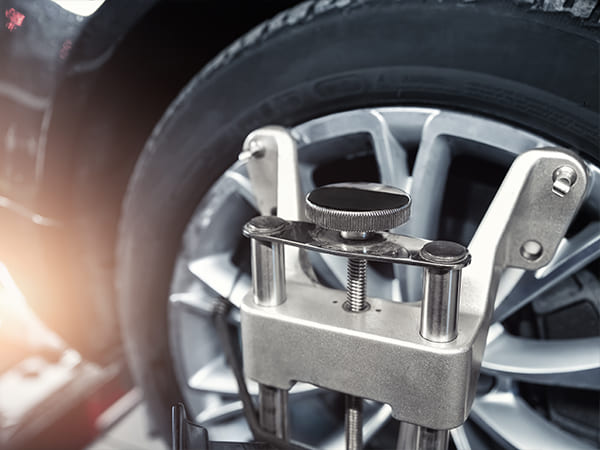
Professional alignment equipment measures angles that the human eye cannot detect.
DIY Checks vs. Professional Evaluation
You can check:
- Tire pressure
- Visible wheel damage
- Steering wheel centering
- Obvious pulling on flat roads
But alignment angles require calibrated equipment.
A vehicle can appear normal while still wearing tires unevenly. That’s the hidden risk.
In our experience servicing vehicles in Denver, some drivers wait until tire wear becomes visible. At that point, the tire damage is already done.
Real-World Example From Our Work
After a late snowstorm last year, we inspected several vehicles that struck hidden curbs. One SUV showed no visible damage. The driver reported mild drifting at highway speeds.
Alignment measurement showed the front toe slightly out of spec. Correction resolved the issue immediately. Tire wear had not yet begun.
Catching it early prevented premature tire replacement.
Final Thoughts on Curb Damage and Wheel Alignment
Bumping a curb might feel like no big deal, but your car’s suspension is surprisingly delicate. Even a little jolt can throw your wheels out of whack. That tiny shift, if ignored, can chew up your tires faster, make your car feel less steady on the road, and cost you more down the line.
So, if your steering feels off, your car pulls to one side, or you start seeing weird wear on your tires right after a curb encounter, it’s smart to figure out what’s going on immediately. Here in Denver, checking things out early is usually way simpler and cheaper than dealing with the headache of fixing bigger problems that happen because you waited.
When a Professional Alignment Check Makes Sense in Denver
If you’re unsure whether a curb impact affected your vehicle, a proper inspection provides clarity.
At Salta Automotive, we evaluate steering, suspension, and alignment angles to determine whether adjustment or component repair is necessary. Denver drivers face a lot of stress from deep potholes and icy streets. Getting a quick alignment check stops hidden damage before it turns into an expensive repair.
Frequently Asked Questions About Curb Impact and Alignment
How hard do you have to hit a curb to cause misalignment?
Not very hard. Even moderate side impact at low speed can shift the toe or camber slightly.
Can a curb hit damage alignment without bending the wheel?
Yes. Suspension components can shift or bend even if the wheel rim appears intact.
Is it safe to keep driving if the car feels normal?
Possibly, but hidden misalignment can cause gradual tire wear. Monitoring is reasonable, but inspection offers certainty.
Will alignment fix vibration after a curb hit?
Not always. Vibration may indicate wheel damage or a bent component rather than alignment alone.
How soon should alignment be checked after impact?
If symptoms appear immediately, check soon. If not, monitor steering feel and tire wear over the next few weeks.
Does Denver weather increase alignment problems?
Yes. Freeze-thaw cycles create potholes, and snow-covered curbs make minor impacts more common.