
If your vehicle refuses to go straight or the steering feels jittery, you have a wheel alignment problem. These symptoms show that your tires aren’t hitting the pavement at the right angle. It ruins your ride quality and safety. Keeping your wheels pointed the right way does more than stop uneven wear. It changes how your car grips the road and makes every turn feel smooth. In Denver, CO, where diverse road conditions, from city streets to mountainous terrain, present unique challenges, proper wheel alignment is more important than ever.
Proper alignment changes how your car feels on the road. I will show you what happens when your tires point the wrong way and why fixing it helps your tires last longer. If you want to improve your driving experience and extend the life of your tires, read on to learn everything you need to know about wheel alignment and handling.
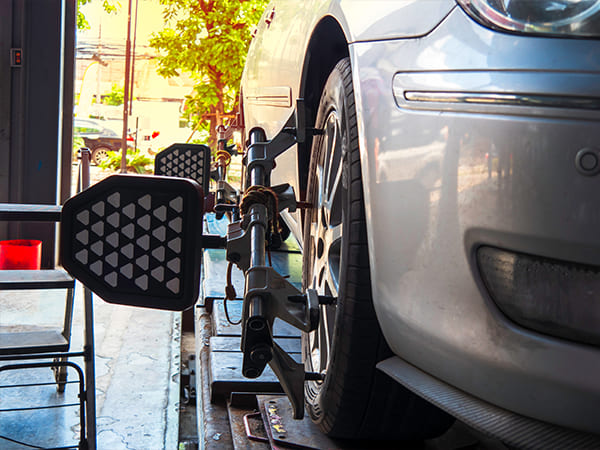
Understanding Wheel Alignment
Ever wonder what keeps your car driving straight and handling smoothly in Denver, CO? It all comes down to wheel alignment!
Think of your car’s suspension system as the arms and legs connecting the wheels to the body of your vehicle. Wheel alignment is simply making sure these “limbs” are adjusted so that your tires are pointing in precisely the right direction. When your alignment is correct, your wheels are perfectly parallel to each other and stand straight up, perpendicular to the road. This is crucial for optimal performance and safety.
When a technician performs an alignment, they are checking and adjusting three key angles:
- Camber: Imagine looking at your car straight on. Camber is the inward or outward tilt of the top of the tire. If it’s tilted too much in either direction, you’ll see uneven wear on the inside or outside edge of your tire, forcing you to replace them sooner than you should!
- Toe: Now, imagine looking down at your tires from above. Toe refers to whether the fronts of your tires are pointing slightly inward (like a pigeon-toe) or outward (like duck feet). Even tiny errors in the toe angle can make your steering feel sloppy and rapidly chew through your tire treads.
- Caster: This one is a bit more subtle—it’s the angle of the steering pivot when viewed from the side. Proper caster is what gives your car that satisfying stability, helping your steering wheel naturally return to the center position after a turn. It’s essential for good handling, especially when cruising at highway speeds.
In short, getting a proper wheel alignment means your car’s wheels are perfectly tuned to the manufacturer’s exact specifications. This translates directly to a smoother ride, better control, and tires that last as long as they possibly can!
Signs of Poor Wheel Alignment Affecting Handling
When your vehicle is misaligned, the effects on handling can be subtle at first, but they often worsen over time. Here’s how misalignment can impact your driving experience:
- Steering Issues: Misalignment causes poor steering response, like the car pulling or drifting, making high-speed control difficult.
- Uneven Tire Wear: Misaligned wheels cause uneven tire wear, leading to premature replacement, reduced stability, and poor responsiveness.
- Decreased Braking Efficiency: Alignment issues can cause pulling during braking, reducing braking effectiveness and safety. Proper alignment ensures even braking force.
- Poor Cornering Performance: Incorrectly tilted wheels affect road grip during turns, leading to instability (oversteering or understeering), making driving more difficult and less safe.
Benefits of Proper Wheel Alignment for Handling
Now that you know the effects of misalignment, let’s dive into the benefits of proper wheel alignment and how it improves handling:
- Improved Steering Response
With proper alignment, your car’s steering becomes much more responsive. You won’t have to fight against your vehicle to keep it in a straight line. This leads to better control, especially when driving at high speeds or navigating tight corners.
- Enhanced Stability and Safety
Proper alignment ensures that your vehicle’s weight is distributed evenly across all four tires. This leads to greater stability on the road, particularly when driving on the unpredictable roads of Denver, whether in the city or on mountainous terrains. Your vehicle will handle better in adverse conditions, like rain, snow, or gravel.
- Longer Tire Life
One of the major benefits of maintaining proper wheel alignment is that it extends the life of your tires. Tires that wear evenly last longer and perform better, saving you money on premature tire replacements and improving fuel efficiency in the process.
- Better Fuel Efficiency
Misaligned wheels cause your car to work harder to maintain speed and stability, which can lower your fuel efficiency. With proper alignment, your vehicle uses less energy to travel in a straight line, which translates to better gas mileage.
- Reduced Wear and Tear on Suspension Components
Misalignment doesn’t only affect the tires—it can also cause premature wear and tear on your vehicle’s suspension system. Proper wheel alignment helps reduce stress on suspension parts like shocks and struts, extending their lifespan and preventing costly repairs.
Case Study: Why Alignment Matters in Denver
In Denver, the combination of varying road conditions, altitude, and weather can cause significant strain on your vehicle’s alignment. Let’s take the example of a local Denver driver, Sarah, who noticed that her car was pulling to the right after hitting a pothole on one of the city’s streets.
After bringing her car in, our technicians diagnosed that her alignment was off due to the impact with the pothole. Not only was this causing steering issues, but it was also putting extra strain on her tires. After a quick alignment service, her vehicle handled better, and the pulling to the right stopped. Furthermore, she noticed an improvement in fuel efficiency and a smoother driving experience, especially on the mountain roads surrounding Denver.
This case highlights how important it is to stay on top of alignment, especially in cities like Denver, where the roads can be unpredictable, and environmental factors play a significant role in vehicle performance.
The Importance of Wheel Alignment for Handling
Getting your wheels aligned does more than keep your tires straight. It changes how your car grips the road and keeps you safe behind the wheel. Proper wheel alignment makes a huge difference. Your vehicle will track straight on the highway and grip the road better on curvy mountain trails. This simple fix prevents your car from drifting. Better alignment makes steering easier, keeps you safe, helps tires last longer, and stops your car from falling apart.
Your car stays steady when your tires point the right way. Proper alignment protects your passengers and stops that annoying steering wheel vibration. Driving shouldn’t feel like a wrestling match with your steering wheel. If the car drifts or the tires wear down fast, your alignment is likely crooked. Stop by the shop to get those wheels pointed straight again. Salta Automotive keeps your car running smooth so you can handle every steep hill and pothole across Denver. Give us a call right now to get those wheels straightened out so your car handles exactly how it should.
Frequently Asked Questions
How often should I have my car’s alignment checked?
Have your wheel alignment checked annually or every 12,000 miles. You should also get an earlier check if you experience steering problems, notice uneven tire wear, or if your vehicle has recently hit a curb or a major pothole.
Can misalignment affect my car’s handling?
Yes, misalignment can cause steering issues, poor cornering, and reduced stability, making it harder to control your vehicle.
How do I know if my car needs an alignment?
Signs include your car pulling to one side, uneven tire wear, steering wheel vibrations, or difficulty steering.
Does alignment affect my car’s fuel efficiency?
Yes, misalignment can decrease fuel efficiency because your car has to work harder to maintain speed and stability. Proper alignment can improve gas mileage.
Can I drive my car with misaligned wheels?
A: While it’s possible, driving with misaligned wheels can cause unsafe handling, uneven tire wear, and other damage to your vehicle. It’s best to address misalignment as soon as possible.