
Preventive oil maintenance protects European engines from internal wear, deposit buildup, and potential damage to variable valve timing systems and turbochargers. Using exact manufacturer-approved oil specifications preserves hydraulic component function and maintains intended fluid viscosity. Adhering to qualified maintenance schedules supports consistent performance, proper lubrication, and long-term vehicle reliability.
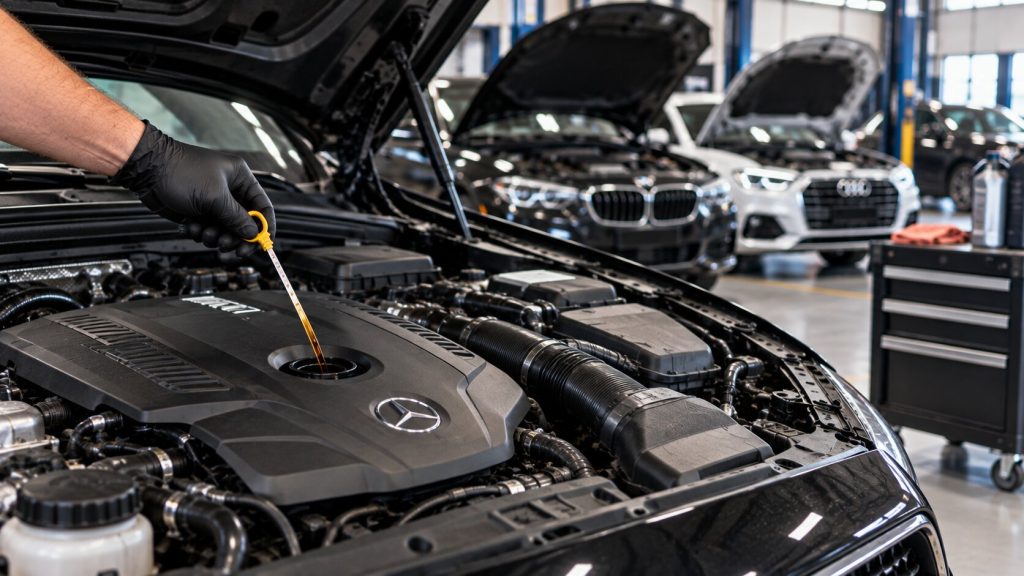
Modern European vehicles rely on complex mechanical and hydraulic systems to deliver high efficiency and responsiveness. Engine oil functions as an active fluid component within these powerplants, performing far more duties than standard surface lubrication. Keeping up with regular oil services using exact factory-approved formulations ensures these intricate internal components remain properly lubricated and operating as designed.
The Role of Engine Oil in European Vehicle Performance
Engine oil serves multiple mechanical functions in high-efficiency European powerplants, such as those engineered by BMW, Audi, Mercedes-Benz, Porsche, Volkswagen, Volvo, MINI, Land Rover, Alfa Romeo, and Fiat. Far beyond basic surface lubrication, engine oil functions as an active mechanical component within the engine:
- Friction Reduction: Creates a protective lubricating film between moving components, including crankshaft bearings, camshafts, and piston rings, helping reduce friction and wear.
- Thermal Management: Absorbs heat from internal engine components, including pistons, bearings, and turbochargers, and carries it away to help regulate operating temperatures.
- Contaminant Suspension: Contains additives that help prevent deposits and keep combustion byproducts, soot, and small particles suspended. While the oil filter removes many contaminants, others remain in the oil until it is changed.
- Corrosion Protection: Contains additives that help neutralize harmful acids and protect internal engine components from corrosion, particularly during periods of short-trip operation and repeated cold starts.
- Hydraulic Control: Acts as the hydraulic fluid responsible for actuating variable valve timing (VVT) systems, such as BMW VANOS or Porsche VarioCam, and maintaining pressure on hydraulic timing chain tensioners.
Over time, exposure to heat, fuel dilution, and normal engine operation can degrade engine oil and deplete its protective additives. As the oil deteriorates, its ability to lubricate, manage heat, and protect internal components can diminish, increasing the potential for engine wear.
How Postponed Maintenance Affects Internal Engine Components
When oil service intervals are extended beyond effective fluid life, degraded oil and suspended debris continue circulating. Over extended periods, this can contribute to several documentable engine issues:
- Sludge and Deposit Accumulation: As oil additives deplete, oxidation causes oil breakdown, forming thick sludge. Deposit buildup can restrict narrow oil passages, reduce flow to upper valvetrain components, and obstruct oil pickup screens.
- Timing Chain and Tensioner Wear: Many modern European engines rely on steady hydraulic oil pressure to maintain timing chain tension. Contaminated or degraded oil accelerates wear on timing chain links, guides, and hydraulic tensioners, which can contribute to timing chain slack or improper timing over time.
- Variable Valve Timing (VVT) Solenoid Restrictions: VVT solenoids feature precise oil passages and fine mesh screens to regulate camshaft timing. Debris and degraded fluid can clog these passages, resulting in sluggish VVT response, engine control unit (ECU) fault codes, and reduced power output.
- Turbocharger Thermal Stress: Turbochargers subject engine oil to high operational temperatures inside the center housing bearing assembly. Degraded or improper fluid can bake or “coke” inside turbo oil feed lines, restricting fluid flow and accelerating bearing wear.
Manufacturer Oil Specifications vs. Standard Viscosity Ratings
A common misconception in European automotive care is assuming that any oil matching a basic viscosity grade (such as 5W-30 or 0W-40) provides adequate protection. European vehicle manufacturers establish strict oil performance specifications that extend beyond basic viscosity:
- BMW (Longlife-01): Emphasizes thermal stability, wear protection, and resistance to viscosity breakdown under demanding operating conditions.
- VW and Audi (VW 504 00 / 507 00): Incorporates low-SAPS requirements to help protect emissions-control systems while maintaining engine wear protection and oil stability.
- Mercedes-Benz (MB 229.51): Combines oxidation resistance and engine protection with low-SAPS requirements for compatibility with certain emissions-control systems.
- Porsche (Porsche A40): Includes demanding requirements for high-temperature performance, shear stability, and engine protection under severe operating conditions.
Using fluid carrying the exact manufacturer approval ensures additive chemistry aligns with specific internal metal alloys, seal materials, and emissions control systems. European engines require their applicable European vehicle oil service specifications regardless of where or how the vehicle is driven.
Determining Recommended Engine Maintenance Intervals
Factory maintenance guidelines establish baseline recommendations, but an individual vehicle’s ideal service schedule depends on qualified operational factors:
- Engine Design: Different engine generations, oil capacities, and features such as turbocharging or direct fuel injection can influence how engine oil performs and ages.
- Driving Conditions: Frequent short trips, cold starts, stop-and-go commuting, towing, and sustained high-load operation can increase demands on engine oil compared with steady highway driving.
- Time and Mileage: Engine oil ages with use and time, making both factors important when determining service intervals. Vehicles driven infrequently or accumulating very little mileage may still require annual oil changes.
We recommend a 5,000-mile or 6 month oil change interval as a practical, proactive baseline for most European vehicles in daily service. While some manufacturer schedules outline longer intervals under ideal conditions, routine 5,000-mile or 6 month services help us minimize deposit accumulation and offset the effects of frequent temperature cycling and stop-and-go driving.
What Happens During Our European Oil Service
Our routine oil care involves systematic visual and digital evaluations to monitor overall engine condition:
- Vehicle-Specific Oil & Filter Selection: Service includes installing fluid that meets the vehicle’s precise manufacturer approval specification alongside an OEM-quality filter.
- Accessible Area Visual Inspection: We check accessible engine compartments and undercarriage areas for visible fluid weeping, seepage, or wear.
- Digital Vehicle Inspection (DVI): Every oil service includes a thorough Digital Vehicle Inspection featuring photographs and technician notes, giving you clear visibility into current vehicle health so you see what we see.
- Clear Communication: Inspection findings are shared directly so maintenance needs can be evaluated and prioritized together.
Depending on individual vehicle symptoms, mileage, or operational history, further testing or diagnostic evaluation may be recommended to identify underlying concerns.
Schedule Your European Oil Service in Denver
Consistent preventive fluid maintenance supports long-term engine efficiency and overall mechanical dependability. Whether your vehicle is due for routine fluid care or requires a thorough evaluation, our team at Salta Automotive is prepared to assist you.
Visit us at 1001 E 75th Ave UNIT A, Denver, CO 80229 to discuss your maintenance goals in person. Feel free to schedule your next appointment online for BMW maintenance in Denver or general European vehicle service.
Frequently Asked Questions
Can engine oil condition be determined strictly by looking at the dipstick?
Not always. While clean-looking engine oil is generally a good sign, oil naturally darkens with use, and color alone isn’t a reliable indicator of its condition. A visual inspection can reveal certain problems, but it cannot tell you how well the oil is still performing. At Salta Automotive, we recommend changing engine oil every 5,000 miles to help maintain long-term engine health.
Does driving at Denver’s altitude require a different oil specification?
No. European vehicles require the applicable manufacturer-approved oil specification regardless of elevation. While local factors like mountain climbs, cold winter starts, and varying ambient temperatures can influence driving severity, the required oil specification remains defined by factory engineering requirements.
Does using non-approved engine oil affect vehicle warranty coverage?
Yes, using engine oil that does not meet the manufacturer’s required specifications can jeopardize warranty coverage. If an engine failure is attributed to the use of incorrect oil, the manufacturer may deny coverage for the resulting damage. Using oil that meets the required manufacturer approval helps protect your engine and maintain warranty compliance.
Why is a Digital Vehicle Inspection included with an oil change?
A Digital Vehicle Inspection provides a clear, documented overview of accessible components, fluid condition, tires, and brake wear. Including a DVI with every oil service allows vehicle owners to review visual evidence and technician notes to make informed decisions about their vehicle care..