
Navigating Colorado’s high-altitude passes places higher operating loads on European turbocharged engines. Using manufacturer-approved synthetic lubricants and adopting a 5,000-mile oil service interval maintains optimal lubrication. Completing a pre-trip inspection ensures proper fluid levels and dependable engine performance before ascending mountain grades.
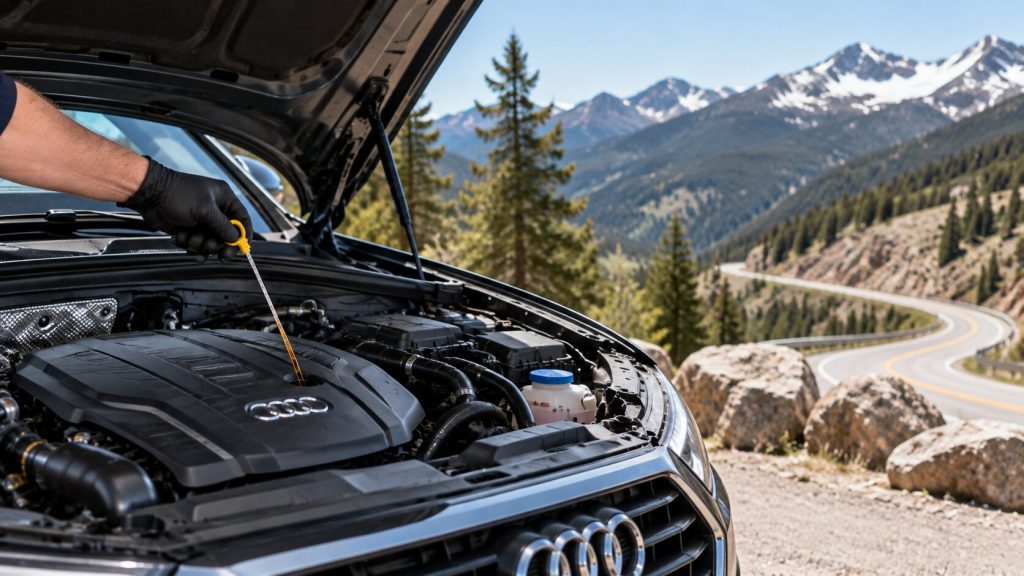
Ascending steep grades like I-70 through the Colorado Rockies demands significantly more work from an engine. Sustained high loads, prolonged elevation changes, and variable operating temperatures increase thermal stress on a lubrication system. Confirming the correct engine oil level and making sure the oil used when adding or changing your oil meets proper specifications before embarking on a high-altitude trip helps ensure a European vehicle performs reliably under these demanding conditions.
How High-Altitude Climbs Increase Engine Thermal Stress
Driving up extended mountain passes places continuous demand on an engine. While flat highway cruising requires relatively low power output, sustained mountain climbs force the engine to operate under higher loads for longer periods.
- Increased Thermal Load: Higher engine load generates additional heat. Engine oil acts as a primary coolant for internal components like crankshaft bearings, pistons, and turbochargers. As temperatures rise during long climbs, the oil must maintain its protective film to prevent metal-to-metal contact.
- Turbocharger Stress: Many modern European vehicles, including models from Audi, BMW, Mercedes-Benz, Porsche, and Volkswagen, utilize turbocharged engines to offset power loss at higher elevations. Turbochargers operate at extreme speeds and temperatures, relying heavily on clean, manufacturer-approved oil for cooling and shaft lubrication.
- Temperature Fluctuation: Mountain travel often involves stark ambient temperature shifts. A cold morning start in Denver followed by an intense climb up to 11,000 feet exposes the engine oil to broad thermal operational cycles.
While altitude itself does not alter the physical chemistry of engine oil or invalidate factory guidelines, the increased mechanical workload associated with mountain travel makes proactive lubrication maintenance a practical step.
Understanding Manufacturer Specifications vs. Driving Conditions
Driving in mountainous terrain does not automatically mean your engine requires a different oil viscosity. While some manufacturers specify a range of acceptable viscosities based on ambient temperatures, others require a particular viscosity and oil specification regardless of climate or driving conditions. Following the manufacturer’s requirements is essential to proper engine lubrication and protection.
Mountain driving can, however, place additional demands on engine oil. Sustained climbs, towing, heavy loads, and changes in operating temperature can influence how hard the engine and its oil must work. For these reasons, Salta Automotive recommends a 5,000-mile oil change interval for European vehicles to help maintain long-term engine health.\
Essential Pre-Trip Oil Inspections Before Heading into the Rockies
Before taking a long mountain road trip, performing a visual and mechanical check helps identify potential concerns.
- Check Oil Level: Verify that the engine oil is at the proper level before departure. Low oil levels can compromise lubrication and increase the risk of oil starvation during prolonged or aggressive cornering, particularly on winding mountain roads.
- Inspect for External Leaks: Check for signs of oil leaking around the engine or underneath the vehicle. Oil leaks often indicate a failing seal, gasket, or other component that could deteriorate further during a long road trip. Identifying these issues before departure can help prevent more significant problems along the way.
- Verify Service History: If a vehicle is approaching its recommended maintenance milestone, completing an oil service before a major trip ensures the engine operates with fresh, fully additive-rich lubricant. Every oil change is accompanied by a Digital Vehicle Inspection from us.
During a pre-trip visit, we check fluid levels, inspect the engine for visible concerns, and evaluate important safety components, including the suspension, steering, tires, and brakes, as part of our Digital Vehicle Inspection. We also perform oil services using manufacturer-approved lubricants and review any additional maintenance or repairs we recommend with the customer before proceeding with approved work.
Step-by-Step Checklist to Prepare Your Vehicle for Mountain Travel
Preparing a car for demanding terrain is a straightforward way to support engine longevity through the Rockies.
- Verify Oil Quality and Level: Check the dipstick or electronic oil level monitor to ensure the oil level is between the minimum and maximum fill lines, preferably in the middle.
- Review the Service Schedule: Check maintenance records to confirm that the oil and filter are within their recommended service window.
- Inspect Accessible Engine Components: Look for signs of oil residue, worn belts, or low coolant levels in the engine bay.
- Schedule a Pre-Trip Evaluation: If you notice low fluid levels, warning lights, or unusual engine performance, testing may be needed before driving into remote areas.
Protect Your Engine Before You Climb
Before heading out into the Rockies, confirming that your European vehicle is ready for high-altitude demands is a smart step. We provide complete oil services and Digital Vehicle Inspections tailored specifically to your vehicle’s manufacturer requirements.
Contact us or schedule an appointment at Salta Automotive located at 1001 E 75th Ave UNIT A, Denver, CO 80229 to ensure your vehicle is ready for the trip.
Frequently Asked Questions
Does driving in Denver’s higher elevation automatically change my oil maintenance needs?
No. Elevation alone does not invalidate factory recommendations or automatically alter oil life. However, driving habits, such as frequent mountain climbs, short winter trips, or heavy towing, can introduce higher operational stresses that make earlier oil maintenance advisable.
Should I use a thicker oil viscosity for mountain driving?
No. You should always use the oil viscosity and manufacturer approval code specified in your vehicle’s owner manual or engine bay cap (such as Porsche A40 or VW 502 00). European engines are engineered with tight tolerances, and using an incorrect viscosity can impair oil flow and cause engine damage regardless of elevation.
Why is clean oil especially important for turbocharged European engines in the mountains?
At higher elevations, thinner air can require turbochargers to work harder and spin faster to maintain engine performance. This can increase the thermal demands on the turbocharger. Clean synthetic oil that meets manufacturer specifications helps lubricate and cool the turbocharger bearings, protecting these components during demanding driving conditions.
Can a visual check determine if my oil needs to be changed before a trip?
Not always. While clean-looking engine oil is generally a good sign, oil naturally darkens with use, and color alone isn’t a reliable indicator of its condition. A visual inspection can reveal certain problems, but it cannot tell you how well the oil is still performing. At Salta Automotive, we recommend changing engine oil every 5,000 miles to help maintain long-term engine health.