
If you are commuting along the I-76 corridor, your BMW’s temperature gauge is telling only half the story. While the highway allows for spirited speeds, the combination of sustained boost and Denver’s unique geography creates a “perfect storm” for turbocharger heat soak.
In BMW’s high-performance engines—specifically the popular N55, B58, and S55 platforms—the turbocharger is a precision instrument that operates at extreme rotational speeds. When pushed during extended highway hauls, this hardware can become a furnace, threatening your oil integrity and intercooler efficiency.
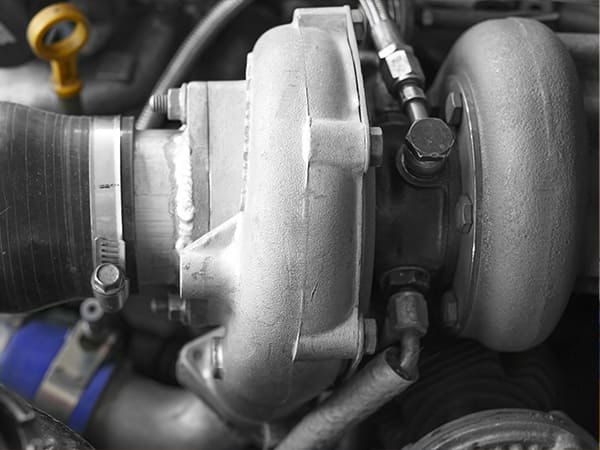
The Denver Factor: Altitude and Turbo Stress
Denver drivers face a challenge that coastal drivers don’t: thin air. At our elevation, a turbocharger must spin significantly faster to compress the less-dense air into the same amount of target boost.
- Higher Pressure Ratios: To maintain power, the turbo works harder, which leads to higher Compressor Discharge Temperatures.
- Heat Soak on I-76: During long stretches of high-speed driving, the engine bay struggles to shed this accumulated heat, eventually “choking” the engine’s ability to breathe.
Critical Systems: Lubrication and Cooling
To survive the heat loads of the Colorado interstate, two systems must be in peak condition:
1. Turbo Lubrication & Oil Coking
The turbocharger’s center housing rotating assembly (CHRA) relies on a thin film of oil to prevent metal-on-metal contact at over 100,000 RPM. Under extreme I-76 heat, standard oil can begin to “cook” or carbonize—a process known as coking. This creates abrasive deposits that can score the turbo shaft and lead to total bearing failure.
2. Intercooler Efficiency and Heat Soak
The intercooler’s job is to chill the compressed “charge air” before it enters the cylinders. On a hot afternoon drive toward Fort Morgan, an undersized or debris-clogged intercooler can become “heat soaked.” When this happens, the air entering your engine stays hot, the ECU pulls ignition timing to prevent knock, and your BMW loses its signature “punch.”
Beyond Symptoms: How Technicians Diagnose Turbo Health
While a driver might notice blue smoke or a “siren” whining sound, professional diagnostics at Salta Automotive go deeper to catch failures before they leave you stranded on the shoulder of I-76.
- Smoke Testing: We use specialized smoke machines to find hairline cracks in plastic charge pipes—a notorious BMW weak point that fails under high heat/pressure cycles.
- Data Logging IATs: By monitoring Intake Air Temperatures (IATs) and Wastegate Duty Cycles during a test drive, we can see exactly how efficiently your intercooler is shedding heat.
- Boost Leak & Deviation Analysis: We check for discrepancies between “target boost” and “actual boost” to identify failing diverter valves or worn turbo seals early.
Proactive Maintenance for the High-Altitude Commuter
To extend the life of your BMW’s turbocharger, we recommend three non-negotiable habits:
- The “Cool Down” Period: After a high-speed run on I-76, never shut your engine off immediately. Let it idle for 2–3 minutes. This allows oil and coolant to circulate, pulling heat away from the turbo bearings and preventing oil coking.
- Shortened Oil Intervals: Given Denver’s dust and altitude-induced heat, we recommend changing your high-performance synthetic oil every 5,000 miles, rather than the longer factory-suggested intervals.
- Component Upgrades: For frequent I-76 commuters, upgrading to an aluminum charge pipe can prevent the common “blown pipe” scenario that plagues factory plastic units.
Schedule Your BMW Turbo Evaluation Today
Don’t wait for a “Drive Malfunction” warning to appear while you’re in the fast lane. At Salta Automotive, our technicians specialize in the complexities of European forced-induction systems. Whether you need a routine oil analysis or a deep-dive diagnostic into your boost pressure, we ensure your BMW is built to handle the heat.
Contact Salta Automotive today to keep your morning commute as high-performance as your vehicle was designed to be.
Frequently Asked Questions
Why does my BMW feel slower on hot afternoons on I-76?
This is likely due to “Heat Soak.” When the intercooler cannot effectively cool the intake air—common during high-speed hauls in 90°F+ Denver weather—the engine’s ECU detects rising intake temperatures. To prevent engine knock, it “pulls timing” and reduces boost, resulting in a noticeable loss of horsepower.
What is the “siren sound” everyone associates with BMW turbos?
A high-pitched whining or whistling sound that follows engine RPM (often called the “Police Siren”) usually indicates a compressor wheel imbalance or a boost leak. At Denver’s altitude, your turbo spins faster to compensate for thin air, which can accelerate the wear on the bearings that cause this noise.
Is the factory 10,000-mile oil change interval safe for my turbocharged BMW?
While BMW suggests long intervals, local experts in Colorado recommend 5,000 miles. The extreme heat generated by the turbochargers during I-76 commutes can “cook” the oil (coking), leading to sludge buildup that can clog the delicate oil feed lines to the turbo.
What is a “Charge Pipe,” and why do Denver BMW owners talk about it so much?
The factory charge pipe is made of plastic. Over years of heat-cycling—getting hot on the highway and cooling in the garage—the plastic becomes brittle. Under the high-boost pressures required for mountain driving, these pipes often “pop” or crack, leading to an immediate “Drivetrain Malfunction” warning. Replacing this with an aluminum version is a common preventative measure.
Can I diagnose a failing turbo myself with a basic code reader?
A basic OBD-II reader might show a “low boost” code (like P30FF), but it won’t tell you why. Professionals use smoke machines to find leaks and multi-channel data logging to check if your wastegates are physically worn or if the issue is electronic. If you see blue smoke or hear new metallic noises, it’s time for a professional evaluation.
How does the “Cool Down” period actually protect my car?
When you shut off a hot engine immediately after an I-76 run, the oil stops circulating but the turbo is still glowing hot. This “soaks” the oil sitting in the bearings, causing it to turn into hard carbon deposits. Idling for 2 minutes allows the oil and coolant to carry that heat away safely.