
Fuel dilution happens when unburnt fuel slips past piston rings into your engine oil, reducing viscosity and lubrication. Cold starts, short trips, and modern injection systems accelerate this accumulation. Routine 5,000-mile oil changes and professional diagnostics help prevent premature wear, keeping your vehicle’s engine protected and running smoothly.
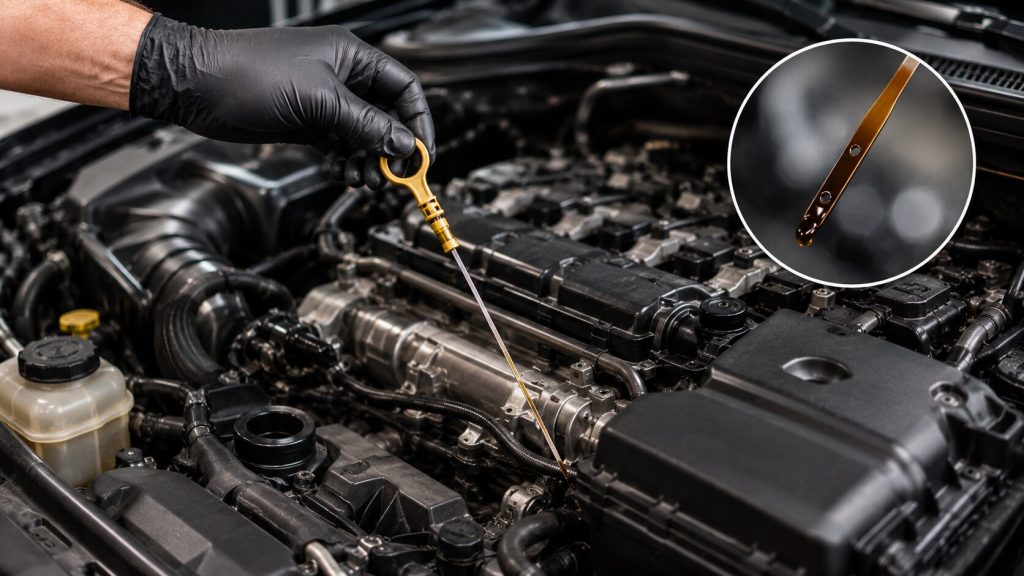
Ever pull the dipstick, take a whiff, and catch a faint smell of gas? A tiny bit of fuel slipping past your piston rings during a cold start is just part of how internal combustion engines operate. But when too much fuel makes its way down into the crankcase, it mixes with your engine oil and creates a problem I call fuel dilution.
Instead of a rich, protective lubricating film guarding your metal components against wear, you end up with oil that has been thinned out and chemically compromised. So, how does it get there, when does it cross the line from normal to harmful, and what does it mean for your daily drive around Denver?
How Fuel Finds Its Way Into Your Oil
Every time an engine fires, microscopic amounts of combustion gases sneak past the piston rings, which is a process we call blow-by. At the same time, tiny amounts of raw fuel can wash down the cylinder walls and slip straight into the crankcase.
How much fuel ends up down there largely depends on your engine’s fuel delivery setup:
- Port-Injected Engines: Spray fuel into the intake port before it ever enters the combustion chamber.
- Gasoline Direct Injection (GDI): Inject fuel directly into the combustion chamber under immense pressure.
Direct injection gives engineers incredible control over efficiency and performance, which is why I see it in almost all modern European and Asian imports. But because the fuel is sprayed right inside the cylinder, factors like injection timing and cold temperatures can easily cause a little extra fuel to wash past the walls and down into the oil.
Why Denver Winters, Cold Starts, and Short Trips Mix Badly
Cold starts force an engine to run differently than it does when fully warmed up. My diagnostic computer always shows a richer fuel mixture during startup, meaning more unburnt fuel is floating around while the metal components are still expanding. This is where your daily routine makes all the difference. Engine oil takes much longer to fully reach operating temperature than your coolant temperature gauge lets on.
If you mostly use your car for quick hops to the grocery store or short commutes, your engine oil might never reach the sustained heat needed to boil off moisture and volatile fuel. Winter compounds this issue here in Denver. When a vehicle goes through endless cold-start and short-commute cycles in freezing weather without ever stretching its legs on a longer drive, fuel and moisture have plenty of time to accumulate in the crankcase.
I often tell customers that a car with low miles racked up entirely in stop-and-go short trips can actually have much dirtier, more diluted oil than one accumulating steady highway miles.
When Dilution Becomes a Repair Issue
A trace amount of fuel in your oil is not an immediate emergency. The real concern is excessive accumulation that drastically drops your oil’s viscosity, leaving your engine bearings and high-stress components without the cushion keeping them safe from friction.
Worse yet, severe fuel dilution is often a symptom of an underlying mechanical issue I frequently diagnose in the bay, such as:
- A leaking or dripping fuel injector
- Persistent engine misfires
- Excessive blow-by from worn internal components
In these cases, a standard oil change is only a band-aid. It gets rid of the contaminated fluid, but it does not fix why the fuel got there in the first place. If your dashboard lights up with a low oil pressure warning, pull over and shut the engine off immediately. Running without proper oil pressure can destroy an engine in minutes.
How I Diagnose Fuel Contamination
I cannot accurately diagnose fuel dilution just by taking a sniff of the dipstick. Smell tells me fuel is present, but it will not tell me the concentration or the root cause.
When a car comes into my shop with suspected fuel contamination, I skip the guesswork. I review your driving habits, scan for stored fault codes using my OEM-level diagnostic tools, and check fuel pressure behavior or injector performance if the data points me there. While laboratory oil analysis is an option for extreme precision, standard diagnostics combined with my hands-on technical experience usually tell me everything I need to know.
More Than Just an Oil Change
I believe routine maintenance should be a health check for your car, not just an in-and-out fluid swap. I recommend keeping up with oil changes every 5,000 miles, adjusting for time if you do not rack up miles very quickly.
During every service on your import, I use manufacturer-approved fluids, scan the vehicle’s computers for hidden faults, and perform a thorough digital inspection so you can actually see what is going on under the hood. Technology gives us data, but I rely on my experience to turn that data into real answers.
Protect Your Engine With Responsible Maintenance
Fuel dilution is a normal background process that only turns into trouble when driving habits or mechanical hiccups let it get out of hand. Regular, thorough maintenance catches those small changes before they snowball into expensive repairs.
Due for an oil service or want a professional set of eyes on your engine’s health? Schedule an appointment at our shop at 1001 E 75th Ave, Unit A in Denver, and let’s make sure your engine is properly protected
Frequently Asked Questions
Why doesn’t a quick sniff of the dipstick give us the whole story?
While a gas smell confirms that fuel has managed to work its way past the rings, it offers zero insight into my diagnostic concentration levels or whether you are dealing with normal winter condensation versus a failing fuel injector.
Does switching to premium fuel stop fuel dilution from happening?
Octane ratings only measure a fuel’s resistance to pre-ignition and engine knock. Pumping higher-octane gas into your tank will not change how the fuel behaves against the cylinder walls during a freezing cold start.
How do I know if my short daily commute is actually harming my oil?
If your engine never stays at highway operating temperatures long enough to fully vaporize accumulated moisture and fuel, the contaminants build up silently. Drivers with short commutes usually need to shorten their oil change intervals rather than relying strictly on mileage milestones.
Are all modern direct-injection engines doomed to have fuel dilution?
Not at all. GDI technology requires tighter tolerances and proper maintenance, but routine driving habits, like taking the occasional longer weekend trip, give the engine a chance to clear out normal byproducts before they cause trouble.