
Data-driven fleet maintenance helps businesses optimize oil service timing for European vehicles by tracking real-world mileage and operating conditions. Fleet managers can balance reliability with manufacturer specifications using accurate service records, professional Digital Vehicle Inspections, and vehicle-specific oil services designed to support commercial fleet care.
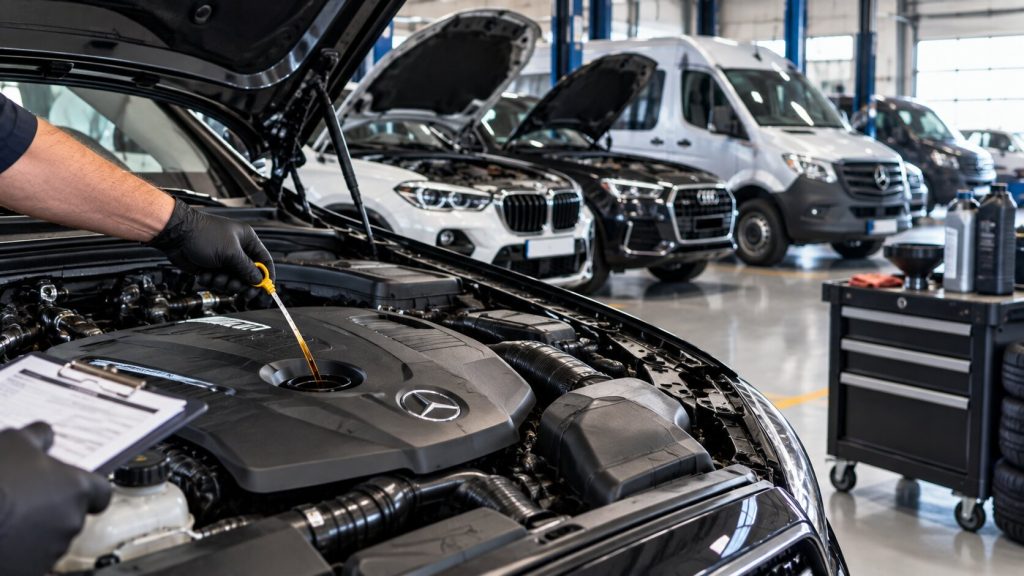
Managing a commercial or mixed fleet of European vehicles in Denver requires a balanced approach to reliability and maintenance planning. For businesses relying on models from manufacturers like Mercedes-Benz, BMW, Audi, or Volvo, standardizing maintenance intervals can be challenging. Fleet operators frequently manage varying mileage accumulation rates, distinct local driving conditions, and complex manufacturer specifications.
Using driving data, mileage patterns, and historical service records allows fleet managers to optimize oil service timing without relying on rigid, one-size-fits-all timelines.
Why Data-Driven Fleet Scheduling Matters
Traditional fleet maintenance often relies on fixed mileage intervals applied uniformly across every vehicle. However, European engines operate under specific engineering standards that require precise fluid formulations and tailored service schedules.
When managing a commercial fleet, I use driving data to bridge the gap between manufacturer specifications and real-world usage. By tracking actual operational variables, I help fleet managers better understand how their vehicles perform under local conditions.
Key Factors Influencing Fleet Oil Intervals
- Driving Patterns: Frequent stop-and-go urban delivery routes versus steady highway mileage create different wear profiles.
- Operating Conditions: Seasonal temperature fluctuations and cold starts can influence engine warm-up periods.
- Vehicle-Specific Requirements: European engines require specific oil viscosity grades and manufacturer approvals that must be respected regardless of fleet management strategies.
Aligning Fleet Maintenance with Manufacturer Standards
My data-driven scheduling approach always respects factory requirements. Adjusting maintenance timing based on driving data means I monitor actual operating conditions to determine when a vehicle reaches its appropriate service window, it does not mean bypassing manufacturer specifications.
- Fluid Specifications: I always use manufacturer-approved oils, which apply regardless of how or where a fleet vehicle is driven.
- Interval Qualification: I determine the appropriate oil change interval based on the specific vehicle model, engine type, schedule guidelines, accumulated mileage, and operating history.
- Avoiding Exaggerations: While Denver operating environments involve variable weather and mountain travel, altitude and local climate do not automatically invalidate factory recommendations or require unapproved oil viscosities.
Implementing a Structured Fleet Inspection Process
Effective fleet maintenance relies on consistent evaluation rather than guesswork. When fleet vehicles reach their scheduled service windows, I follow a structured inspection approach to identify early signs of wear before they impact your operations.
- Digital Vehicle Inspections (DVIs): I perform comprehensive visual inspections, documenting fluid conditions and component wear with photos and detailed notes.
- Component Evaluation: I inspect accessible areas for visible concerns, leaks, or unusual wear patterns.
- Transparent Communication: I clearly communicate my inspection findings so fleet managers can make informed decisions about upcoming maintenance or repairs.
Depending on the vehicle and observed symptoms, further testing or evaluation may be needed to determine the exact cause of any mechanical concern.
Optimize Your Fleet’s Reliability
Maintaining a commercial or personal fleet requires careful planning, accurate record-keeping, and adherence to manufacturer standards. If your fleet vehicles are approaching their next service interval, visit me at Salta Automotive, located at 1001 E 75th Ave UNIT A, Denver, CO 80229, to schedule an evaluation or a Digital Vehicle Inspection.
Frequently Asked Questions
How does driving data improve fleet oil maintenance?
Driving data tracks real-world mileage accumulation, route types, and operational history. This information helps fleet managers schedule oil services based on actual vehicle usage while adhering to manufacturer requirements.
Do European fleet vehicles require special oil formulations in Denver?
No. European engines require the applicable manufacturer-approved oil specification regardless of where the vehicle is operated or driven.
Can fixed oil change intervals be used for all fleet vehicles?
Fixed intervals may not account for differences in vehicle usage. Factoring in individual mileage patterns and operating conditions helps optimize service timing across a mixed fleet.
What is included in a standard fleet oil service?
A standard service includes draining the used oil, replacing the oil filter with a vehicle-specific component, and refilling the engine with the correct manufacturer-approved oil, accompanied by a professional inspection.