
Climbing into your Audi or Volkswagen on a hot Denver afternoon should mean instant relief. But for many German car owners, that first blast of air is warm, weak, or worse—nonexistent. A/C systems in German cars are precision-engineered, which means even a small leak or incorrect refrigerant charge can create noticeable performance problems.
At a mile high, the stakes are higher. Denver’s altitude affects refrigerant pressure, while the region’s rapid temperature swings put extra strain on seals and sensors. For VW and Audi drivers, expert A/C repair isn’t just about comfort—it’s about preserving engine efficiency, preventing costly compressor failures, and ensuring your car’s climate system works seamlessly with its advanced electronics.
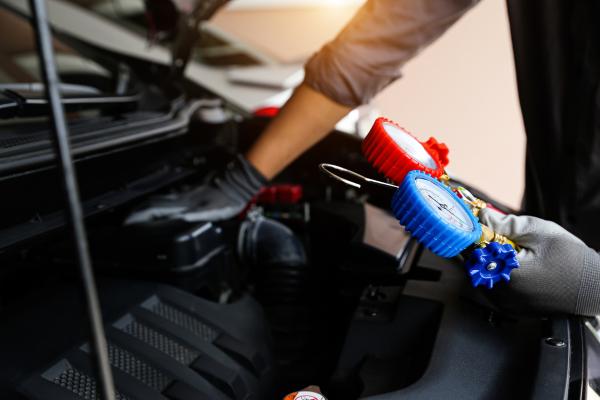
What Exactly Is A/C Repair for Audi and Volkswagen Vehicles?
A/C repair for German cars involves diagnosing and fixing issues in the climate system—from refrigerant recharges to compressor or evaporator replacement. Unlike many domestic vehicles, Volkswagen and Audi A/C systems are engineered with tight tolerances and advanced climate controls.
- Precision Refrigerant Levels: Even a few ounces too much or too little can cause erratic cooling or overload the compressor.
- OEM-Specific Components: Compressors, valves, and condensers are built with narrow specs that don’t tolerate “universal” parts.
- Integrated Electronics: Climate control modules, humidity sensors, and airflow regulators work together—and need proper calibration.
A/C repair in German cars requires OEM-level scan tools and technicians familiar with VW and Audi systems.
The A/C Repair Process for German Cars in Denver
When you bring your Audi or VW in for A/C service, here’s what a professional German car specialist will do:
Step 1: Detailed Diagnostics
- Scan with OEM-level software to identify refrigerant pressure errors, electrical faults, or sensor miscommunication.
- Inspect hoses, the condenser, and compressor clutch for visible leaks or corrosion.
Step 2: Leak Detection
- Use UV dye or pressurized nitrogen to find micro-leaks invisible to the eye.
- Replace faulty seals or hoses with OEM-grade parts to prevent recurring leaks.
Step 3: Component Testing and Repair
- Test compressor output, expansion valve function, and cabin airflow.
- Replace worn compressors, evaporators, or clutches with precision-fit VW/Audi components.
Step 4: Refrigerant Evacuation and Recharge
- Remove old refrigerant and moisture using a vacuum pump.
- Recharge with the exact amount of R-1234yf or R-134a to match your model.
Step 5: System Calibration
- Re-test pressures under Denver heat and elevation load.
- Verify cabin temps drop into the low-40s °F within minutes.
Benefits of Timely A/C Repair for VW and Audi Drivers
Fixing your A/C early offers more than cool air—it preserves the health of your car.
- Efficient Cooling: Restores true factory comfort, even in 95°F Denver afternoons.
- Engine Protection: Prevents compressors from overworking and drawing excess engine power.
- Longer Component Life: Seals, hoses, and compressors last longer when leaks are addressed early.
- Better Fuel Economy: Correct refrigerant levels keep the system efficient.
- Comfort & Safety: Defrost works faster in winter, cabin sensors stay accurate, and fatigue is reduced on long drives.
Warning Signs Your VW or Audi A/C Needs Service in Denver
Unlike sudden engine failures, A/C problems often creep up gradually. Denver drivers should watch for:
- Air that only blows cool while driving, not at idle.
- Strange odors from vents, especially after startup.
- Weak airflow compared to previous summers.
- Clicking noises near the compressor.
- Foggy windows that won’t clear quickly.
These issues often signal leaks, clogged evaporators, or compressor strain.
Real-World Case Study: 2017 VW Golf GTI in Denver Heat
A Denver driver noticed their Golf GTI’s A/C blowing warm air at stoplights and producing a faint odor. A certified German car technician ran diagnostics and found a small evaporator leak causing slow refrigerant loss.
- Repair Performed: Replaced evaporator with OEM Volkswagen part, flushed the system, recharged refrigerant, and disinfected evaporator core.
- Outcome: Cabin temperature dropped to 45°F in under 3 minutes, odor eliminated, and the system held pressure through two consecutive summers without issues.
- Cost Difference: $1,200 proactive repair vs. $3,500+ compressor replacement if ignored.
Why Denver Driving Conditions Stress A/C Systems
- Altitude Effects: At 5,280 feet, refrigerant boiling points change, making overcharges or undercharges more likely to damage components.
- Temperature Swings: Denver can swing 20–30°F in a single day, creating pressure fluctuations inside the system.
- Failure Trends: AAA reports nearly 30% of German car A/C systems develop leaks by 50,000 miles, especially in high-altitude states.
- Warranty Findings: OEM data shows that A/C systems repaired with non-OEM parts are twice as likely to fail again within 15 months.
FAQs About A/C Repair for German Cars in Denver
How often should I service my Audi or VW A/C in Denver?
Most specialists recommend a full inspection every 2 years. Denver’s climate may require sooner service if airflow weakens or cooling drops.
Why does my VW/Audi A/C blow warm only at idle?
Often caused by low refrigerant or a weak compressor clutch that struggles at low RPMs.
Can Denver’s altitude affect my A/C performance?
Yes. High elevation alters refrigerant pressures, so precision charging and calibration are critical.
Why does my A/C smell musty when I start it?
Usually bacterial buildup on the evaporator. A professional cleaning or replacement resolves it.
How much does VW or Audi A/C repair cost in Denver?
Minor services (recharge, seal replacement) run $200–$500. Major repairs (compressor or evaporator replacement) range $1,000–$2,500 depending on the model.
Keep Your German Car Cool in Denver’s Summer Heat
Your Audi or Volkswagen’s A/C system is more than comfort—it’s a precision-engineered system that supports safety, performance, and fuel efficiency. In Denver, with its high altitude and intense summer swings, routine maintenance and timely A/C repair are critical.
By recognizing early warning signs, investing in OEM-quality parts, and trusting specialists who understand German engineering, you’ll enjoy consistent, reliable cooling for years to come.
For more educational resources on Audi and Volkswagen repair in Denver, explore expert insights from Salta Service & Performance—your local partner in keeping German engineering cool and comfortable in Colorado’s toughest conditions.